Delta Horizon: The Future of Flight
Category
Digital, Product, Strategy, UXAbout This Project
Why we did this
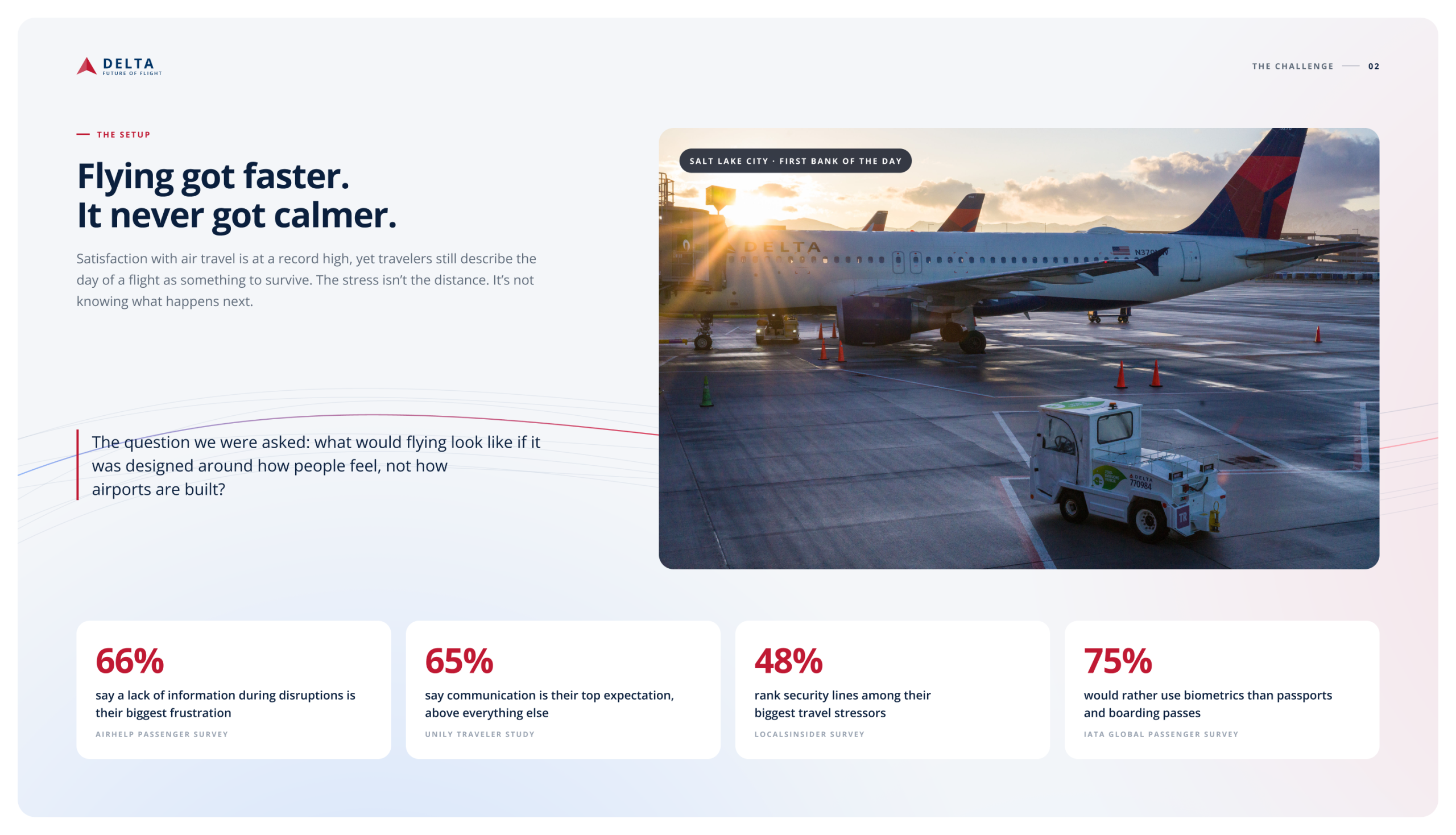
More people are satisfied with air travel than ever before. It’s on record. Yet when we asked travelers to describe the day of a flight, they used words like survive, brace and get through. The aircraft and the airline had been optimized, and the experience still felt like a test. People weren’t complaining about the distance. They were complaining about the not knowing: whether the bag made it, whether the connection would wait, which line was the right one. The biggest frustration travelers report isn’t delays. It’s the lack of information when things go wrong. Speed alone wasn’t going to fix that. What would fix it was certainty, and nobody had designed for it.
Delta already had the pieces of a different answer: an AI concierge in the Fly Delta app, personalized seatback entertainment, digital ID at its hubs. But each of those lived on its own. We set out to ask what flying would look like if it was designed around how people feel instead of how airports are built. And then we pushed that question as far forward as it would go.
What I Led
I led the concept from research through the final vision. We didn’t start in a studio. We started inside the operation:
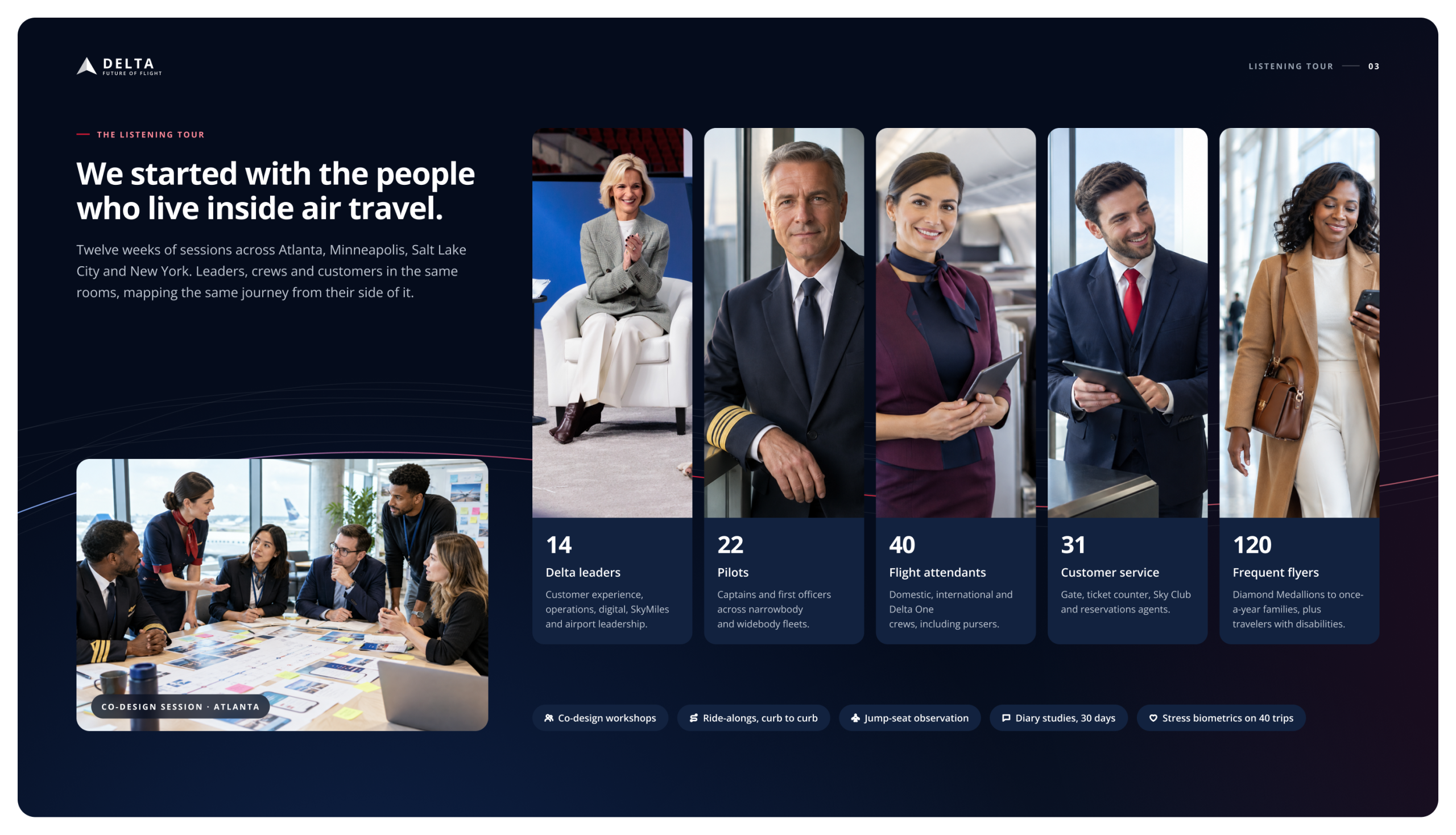
- Twelve weeks of sessions across four Delta hubs.
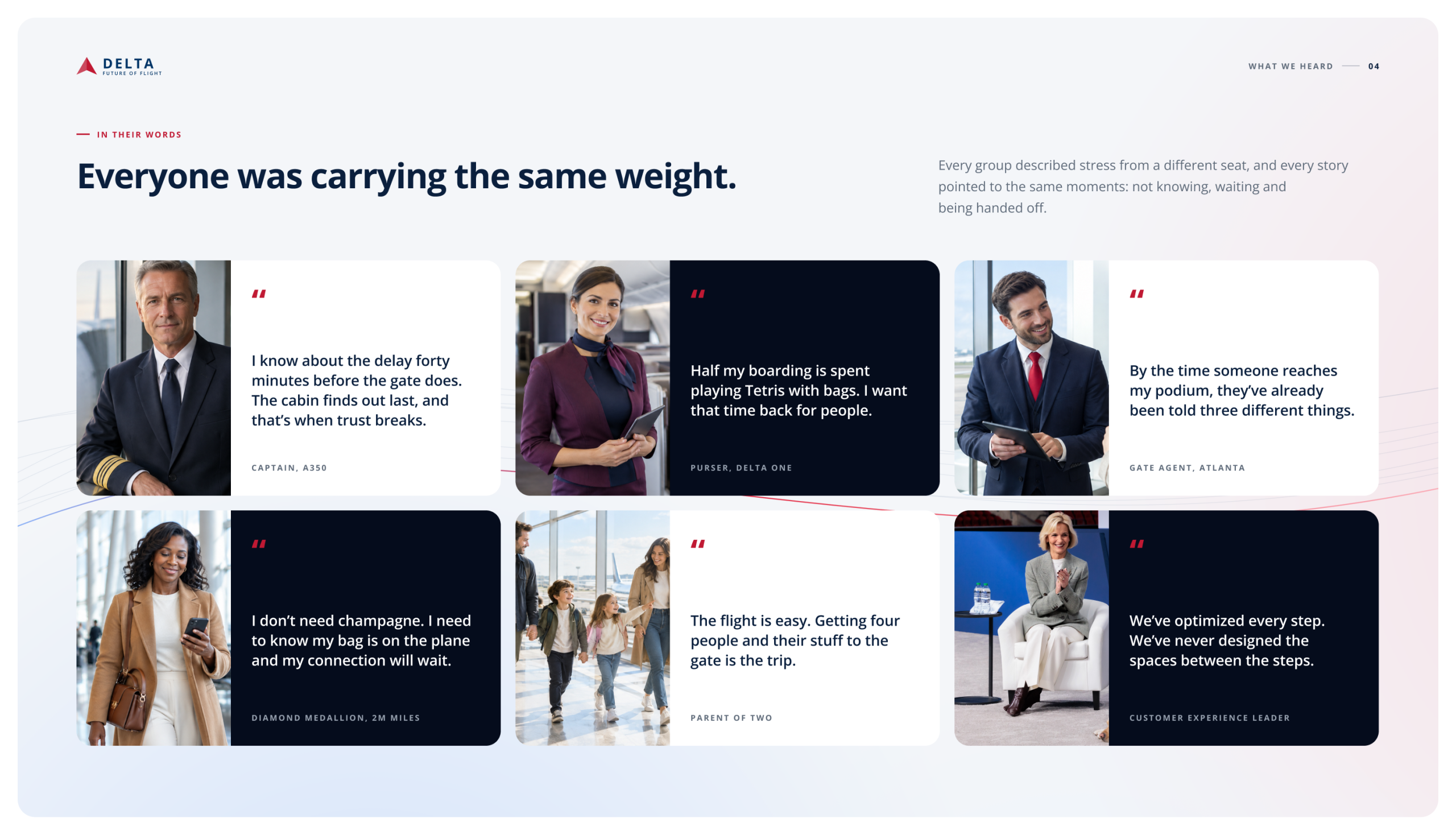
- Delta leaders, captains, flight attendants, gate agents and frequent flyers in the same rooms, mapping the same journey from their own seat.
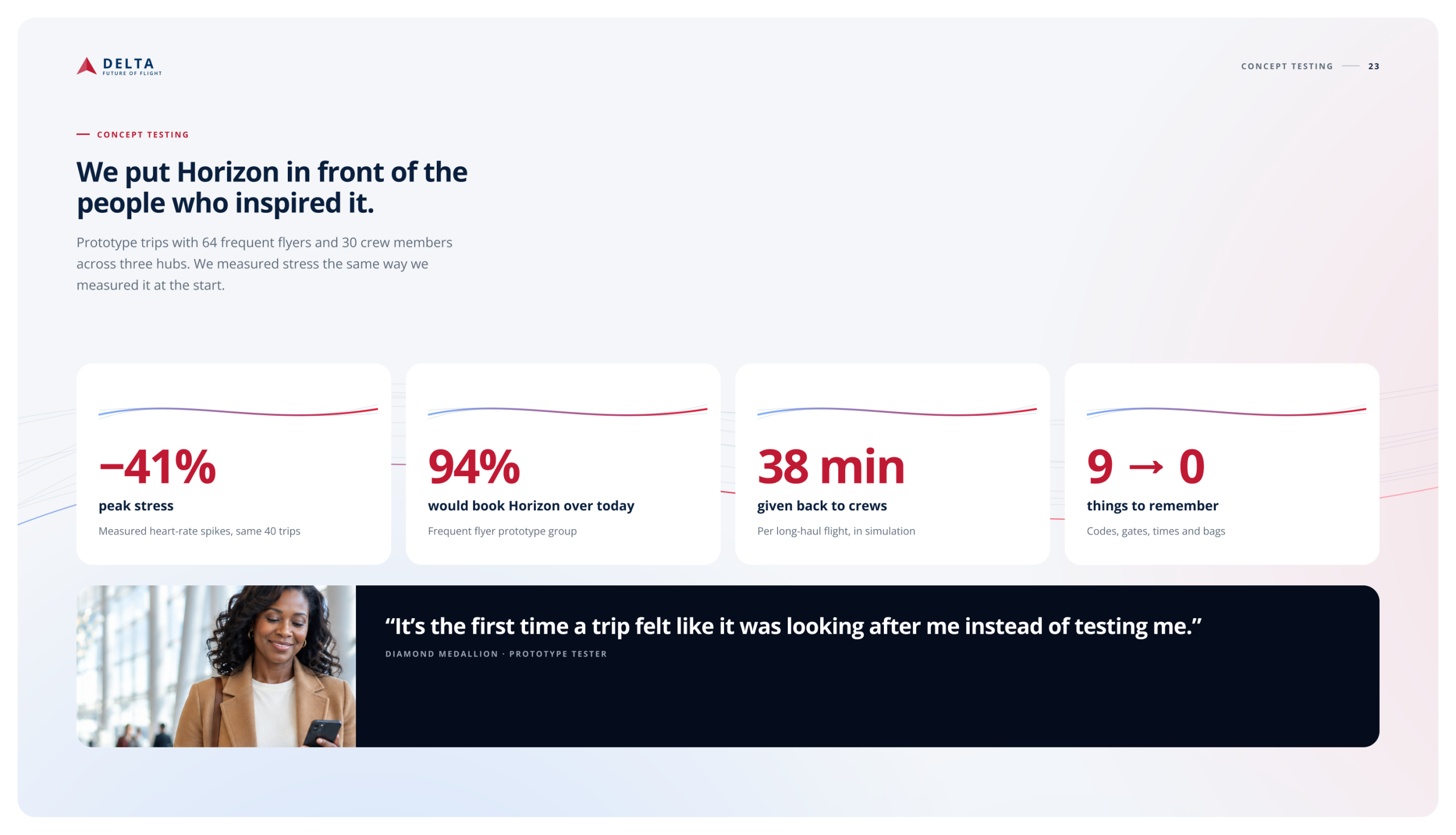
- We rode along with travelers from their front door to their hotel, sat in on crew briefings, and tracked stress on forty real trips.
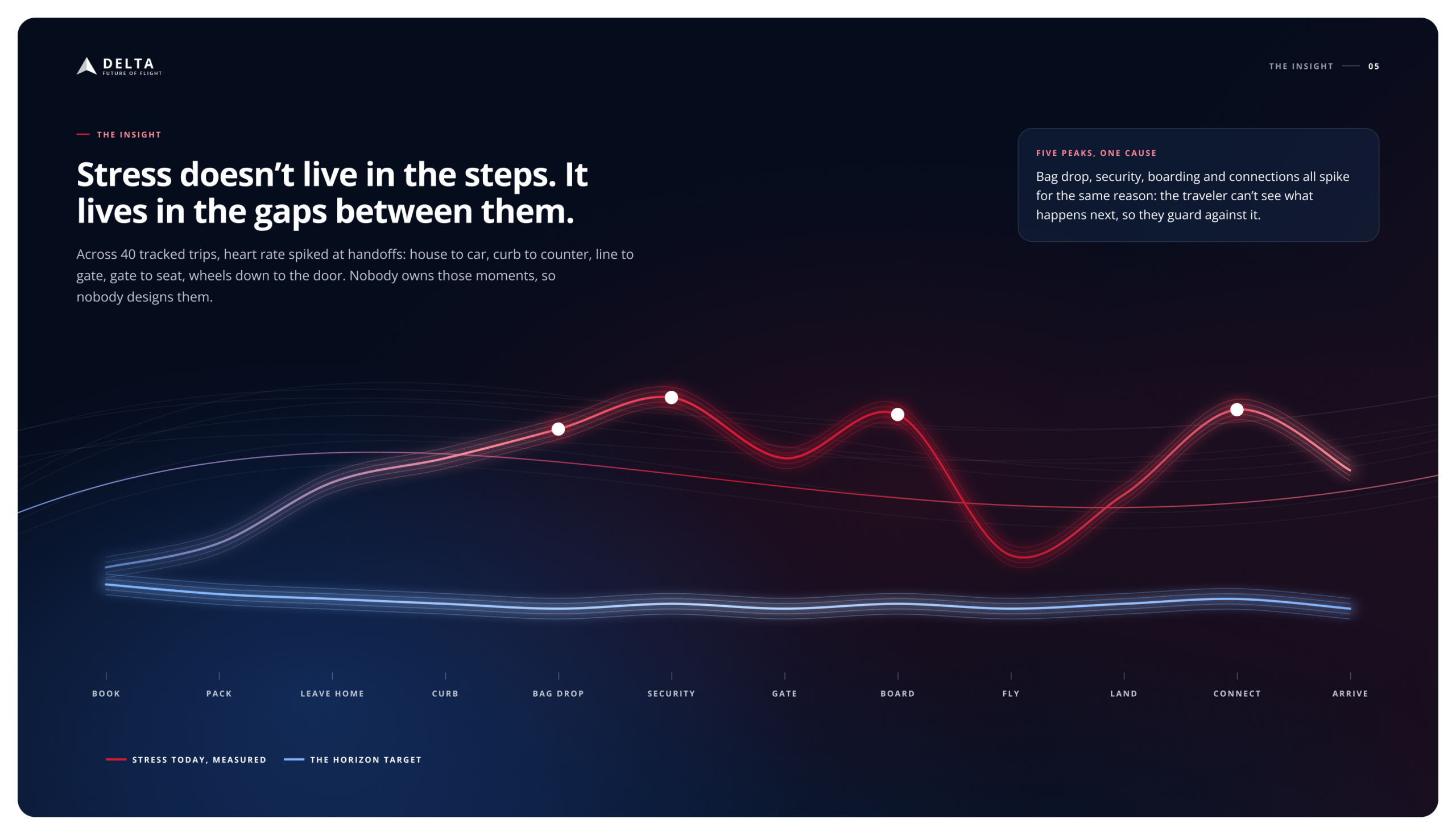
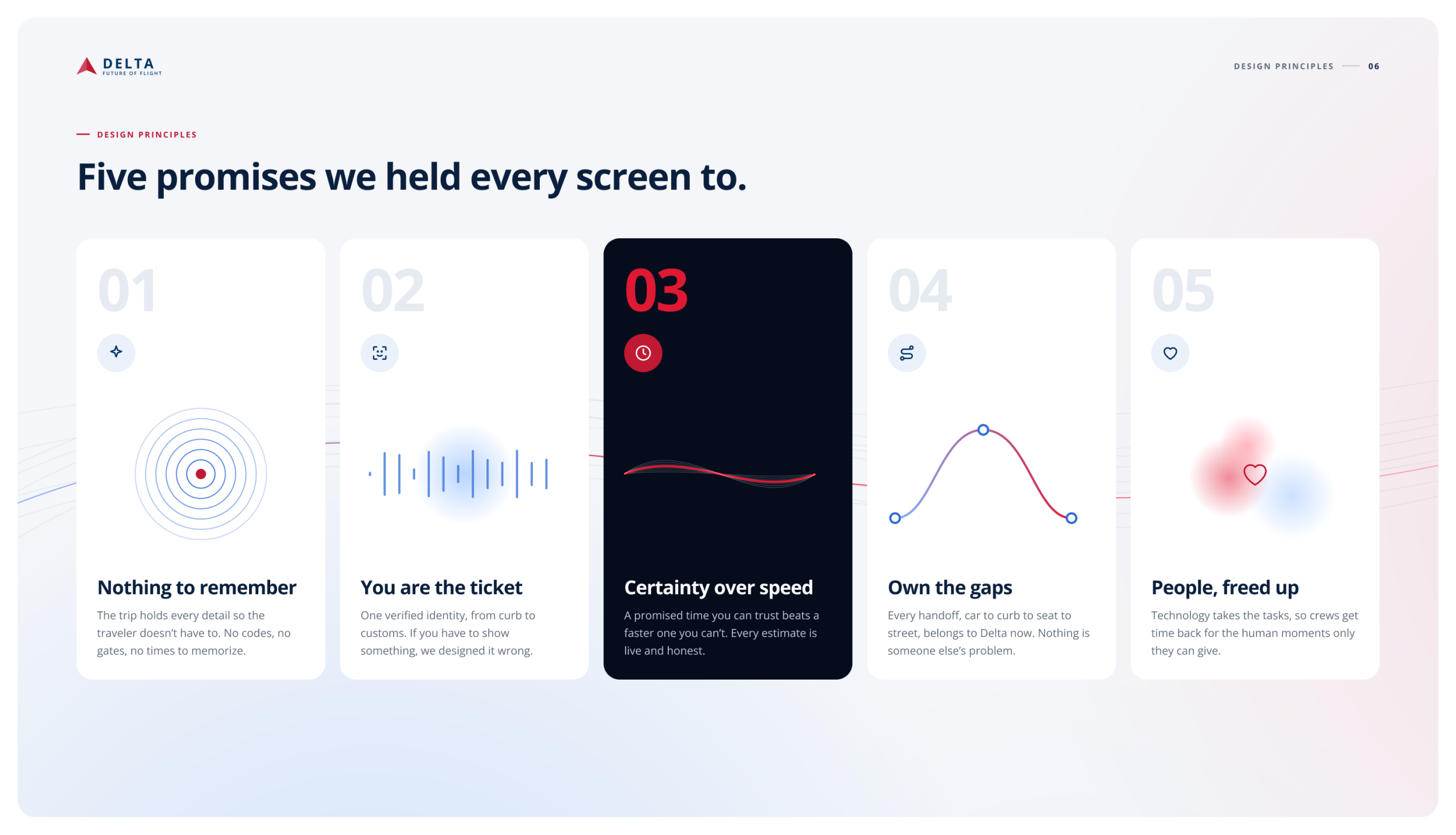
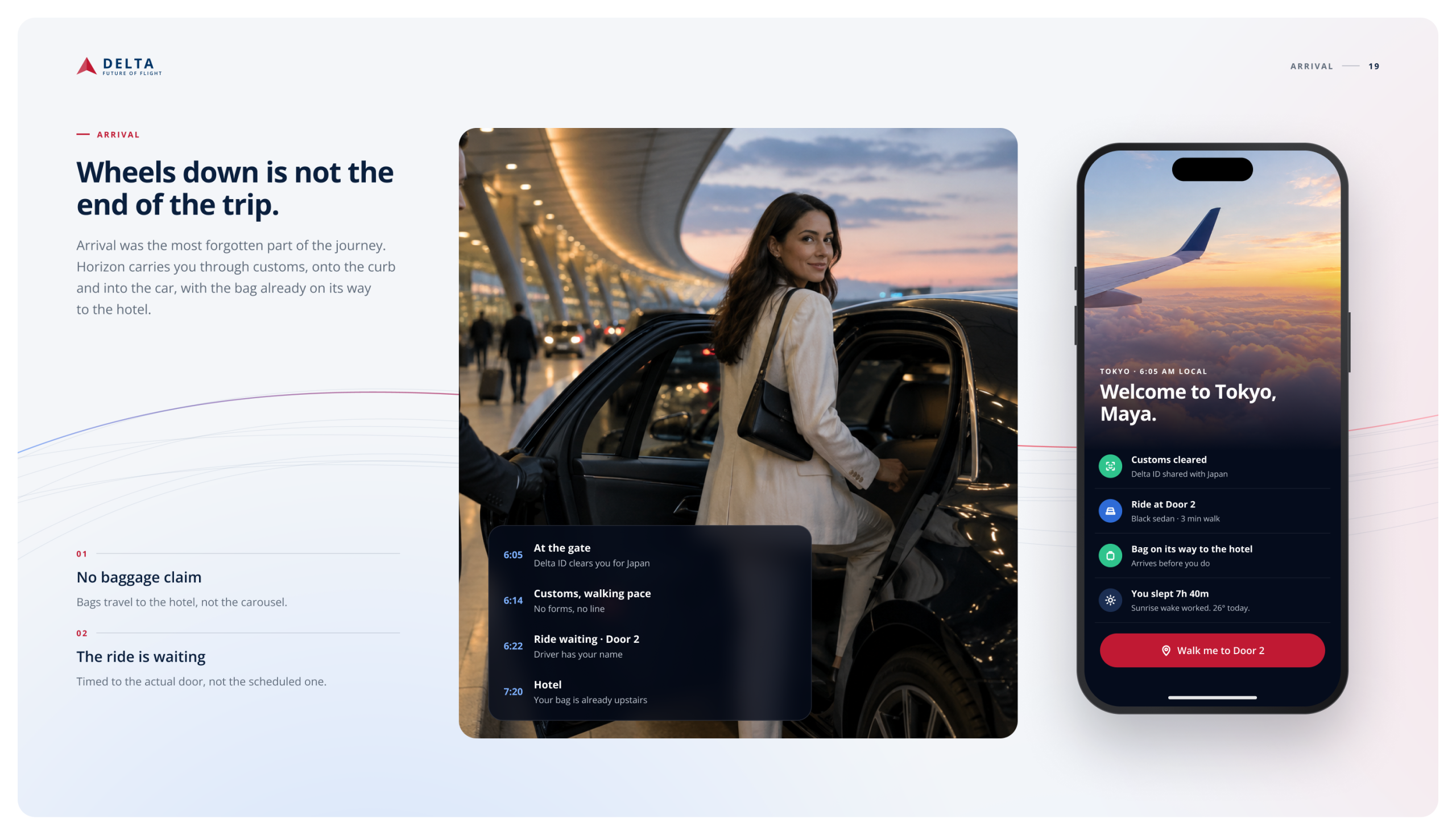
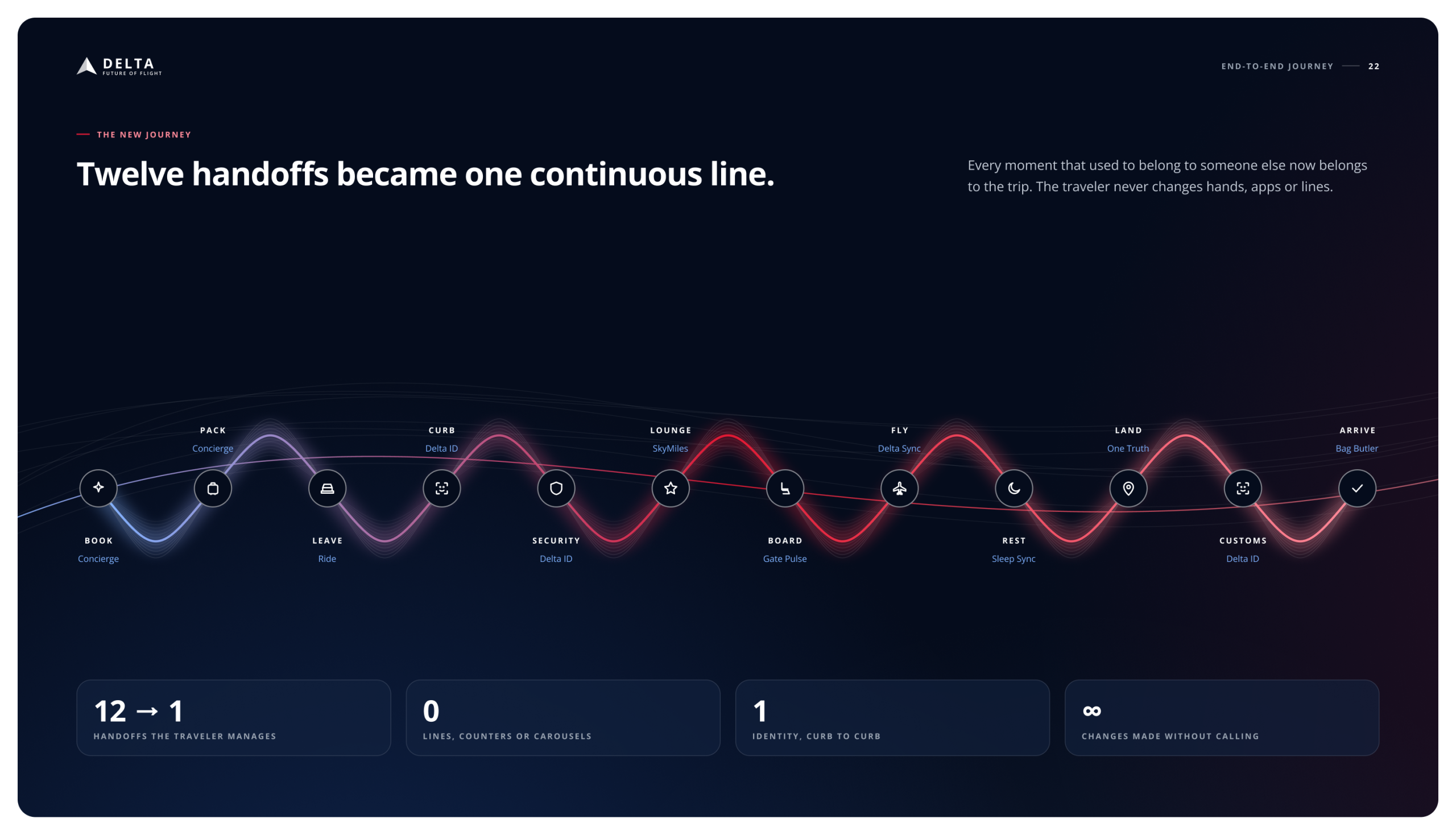
The pattern was impossible to miss. Stress didn’t spike during the flight. It spiked at the handoffs: house to car, curb to counter, line to gate, gate to seat, wheels down to the door. Nobody owned those moments, so nobody had ever designed them. That became the brief. Own the gaps, and give every traveler one thing they never had: the confidence that the trip was taking care of itself.
What We Delivered
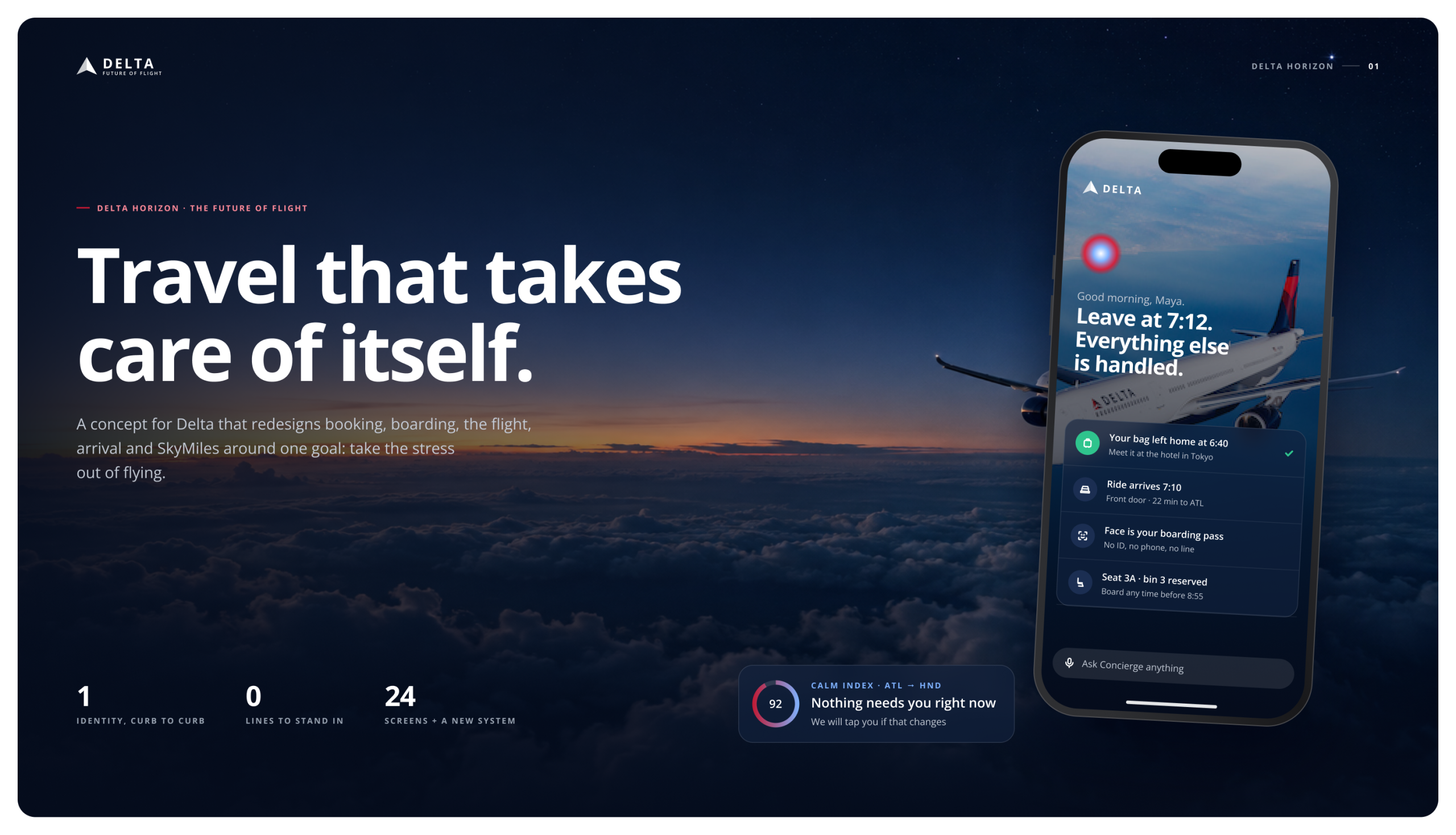
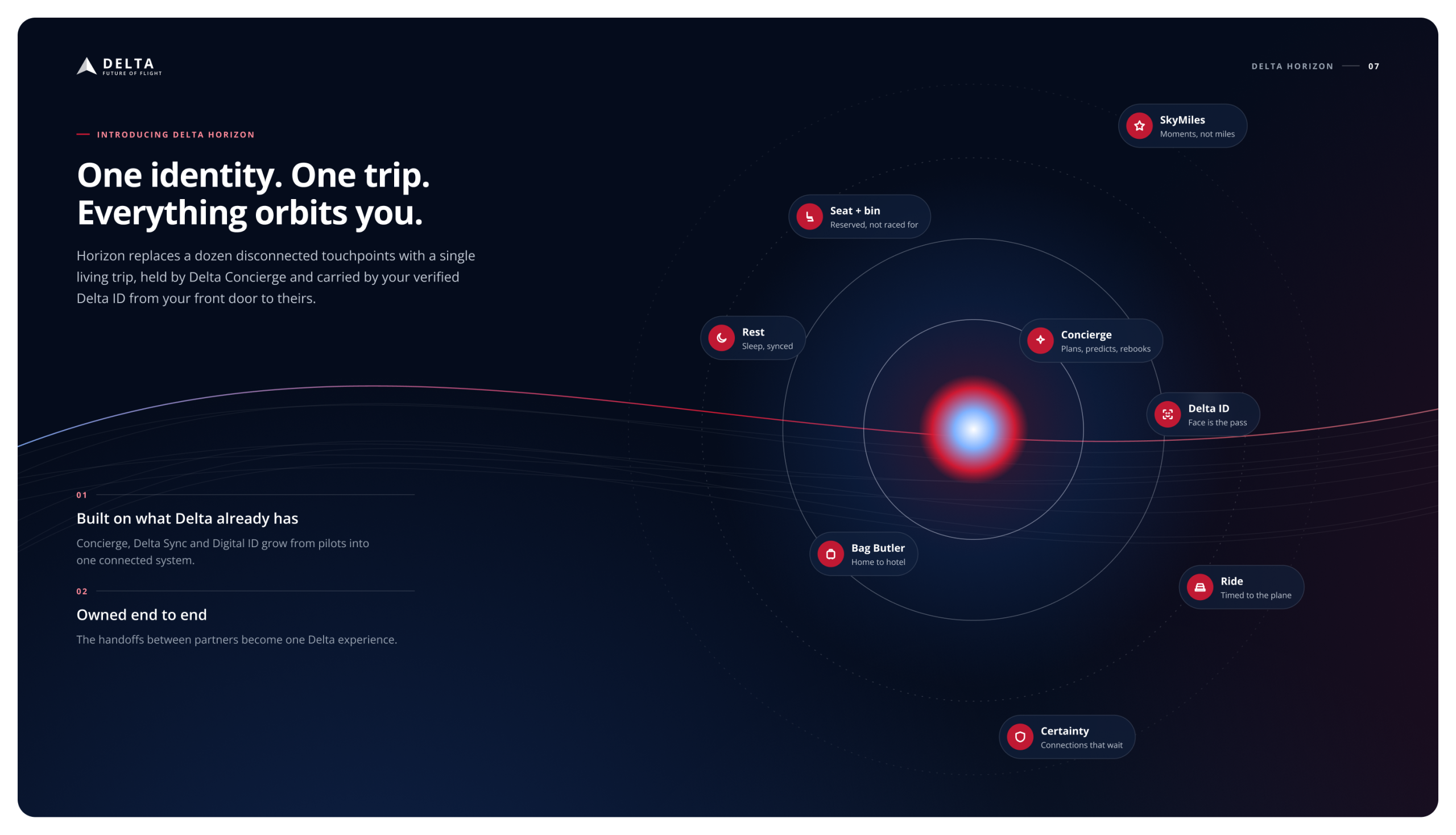
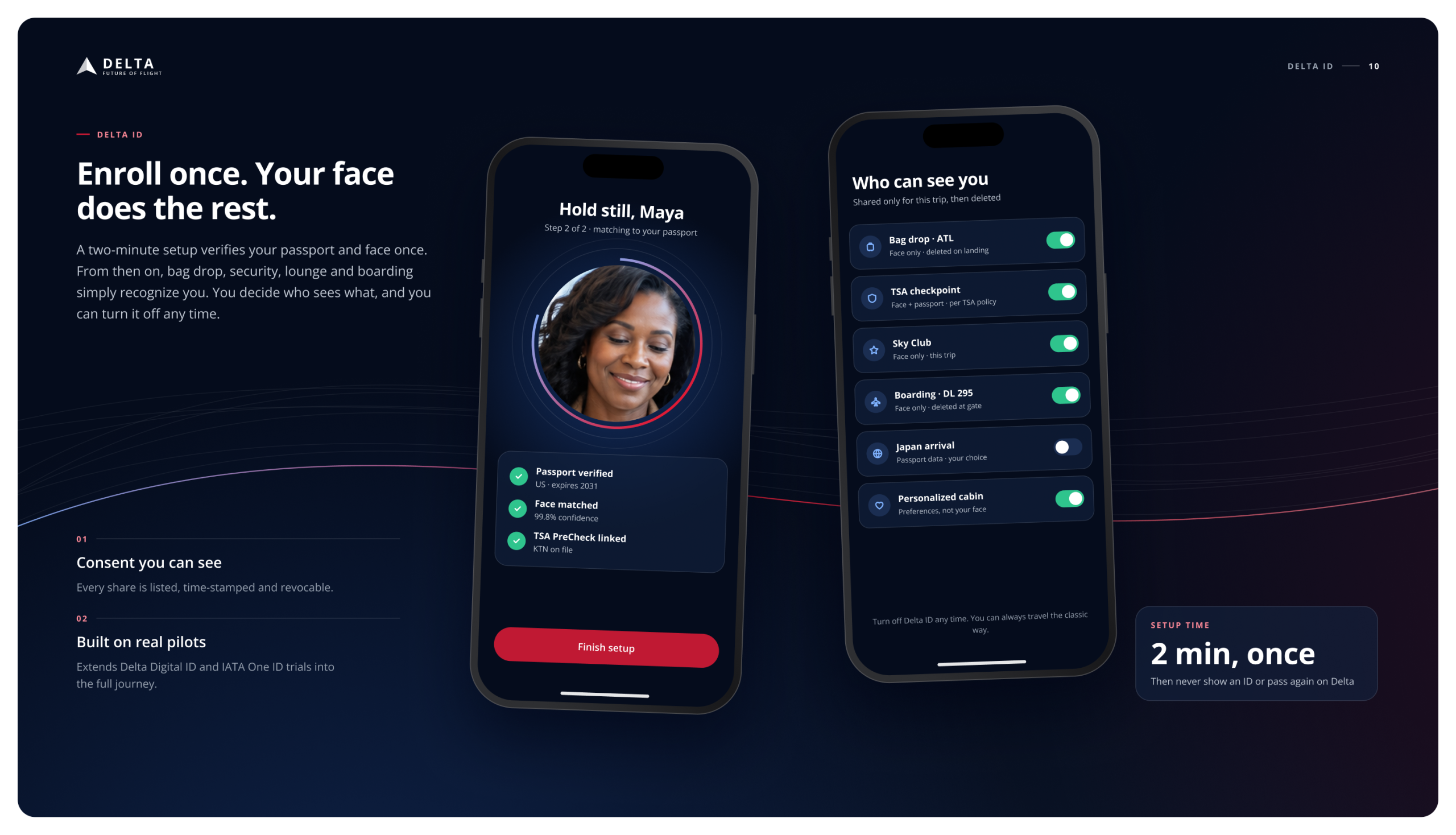
Delta Horizon is one system built around one identity. Travelers verify their face and passport once, and from then on they are the ticket.
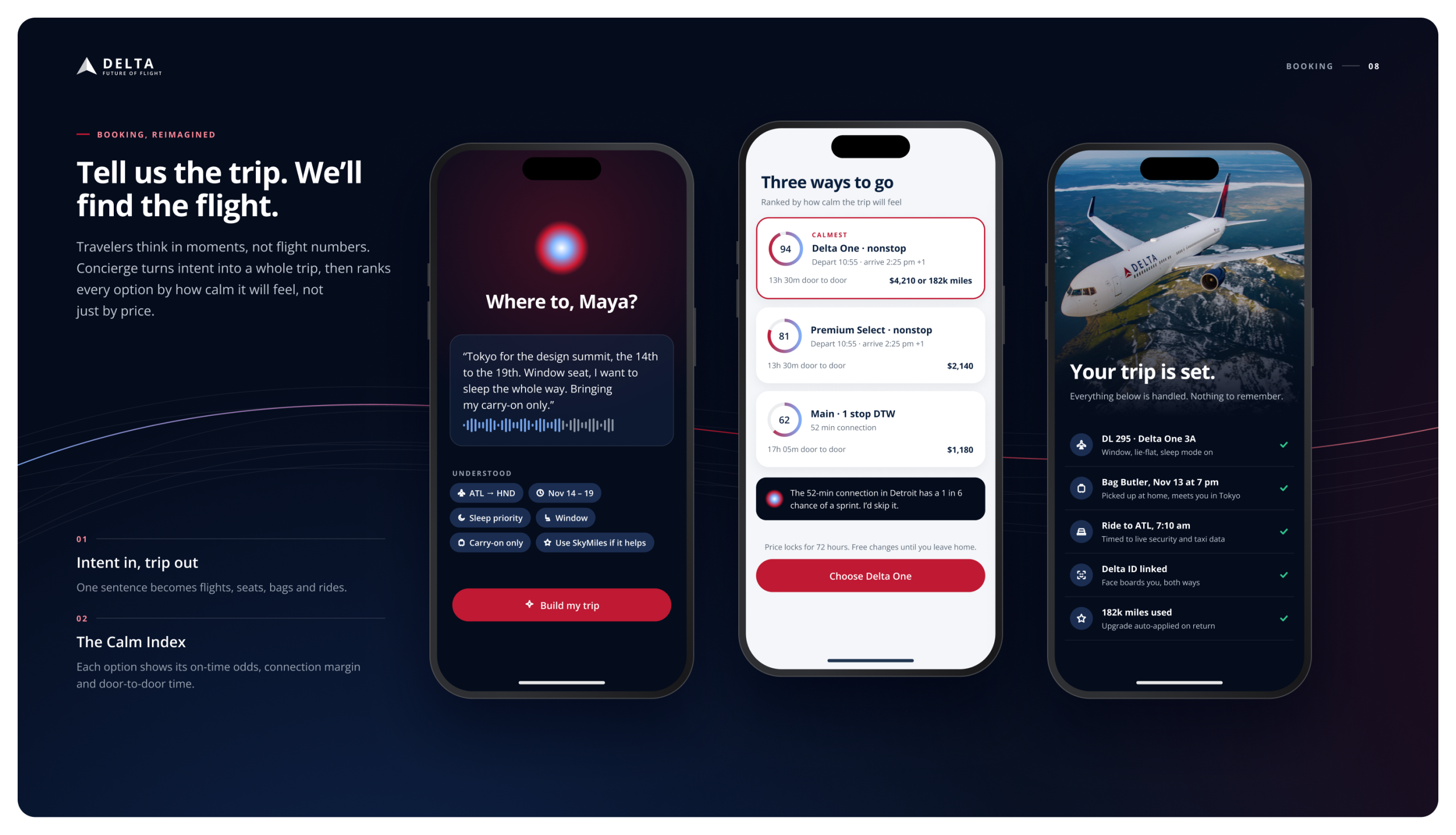
- Booking: a conversation, not a search form, with every option ranked by how calm the trip will feel.
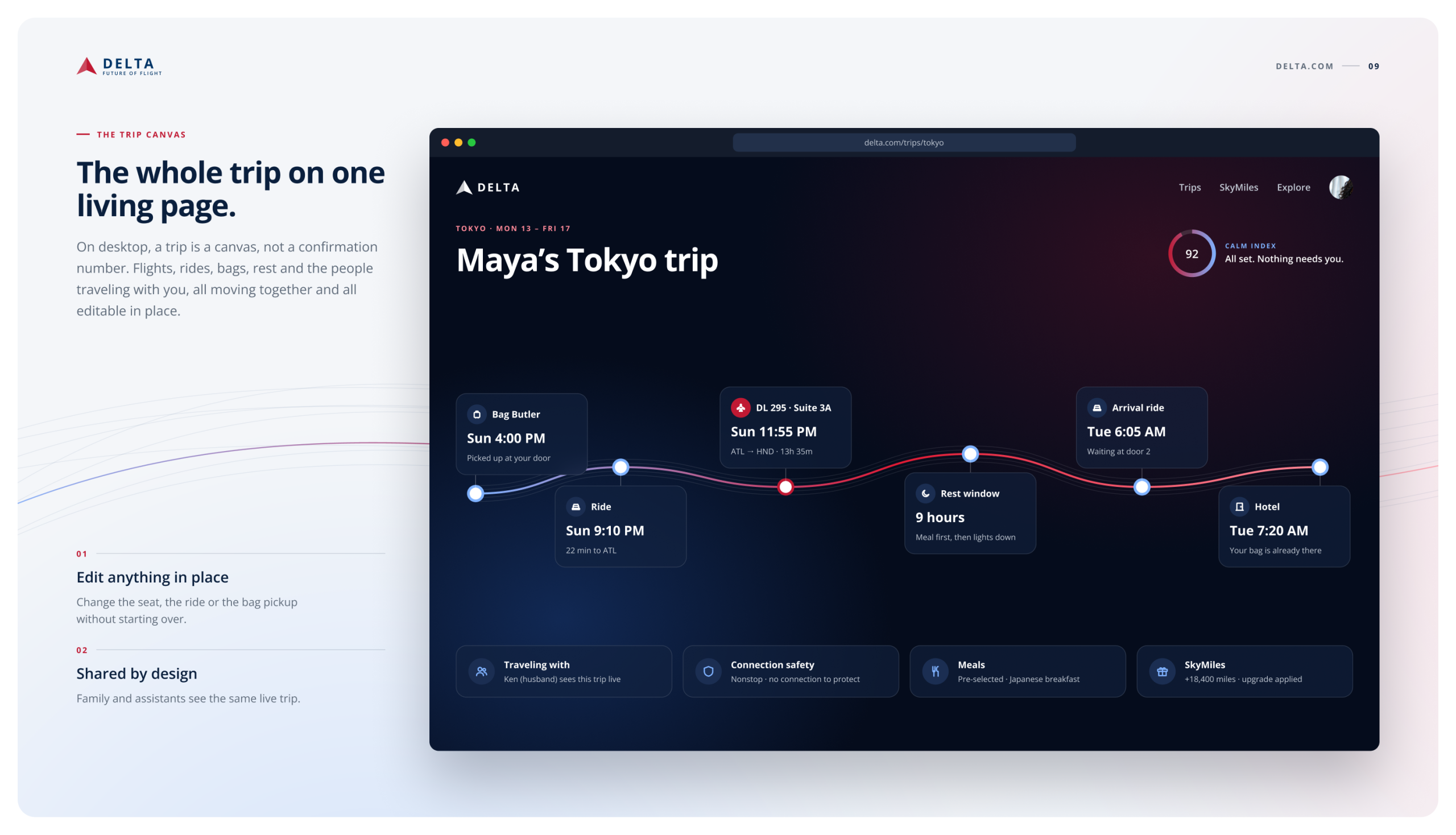
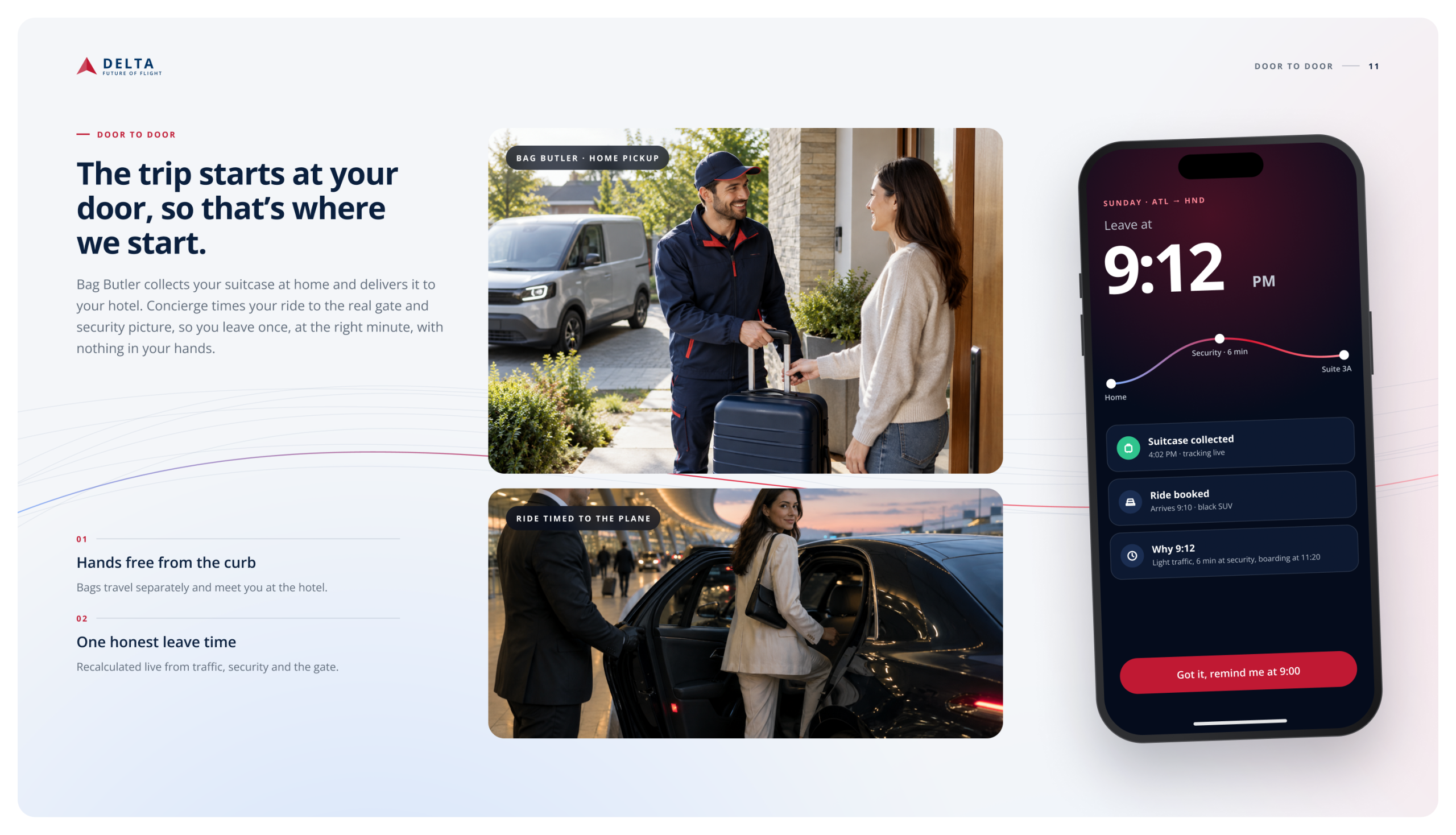
- Before the airport: bags leave from home and meet you at the hotel, and the ride is timed to the real line at security.
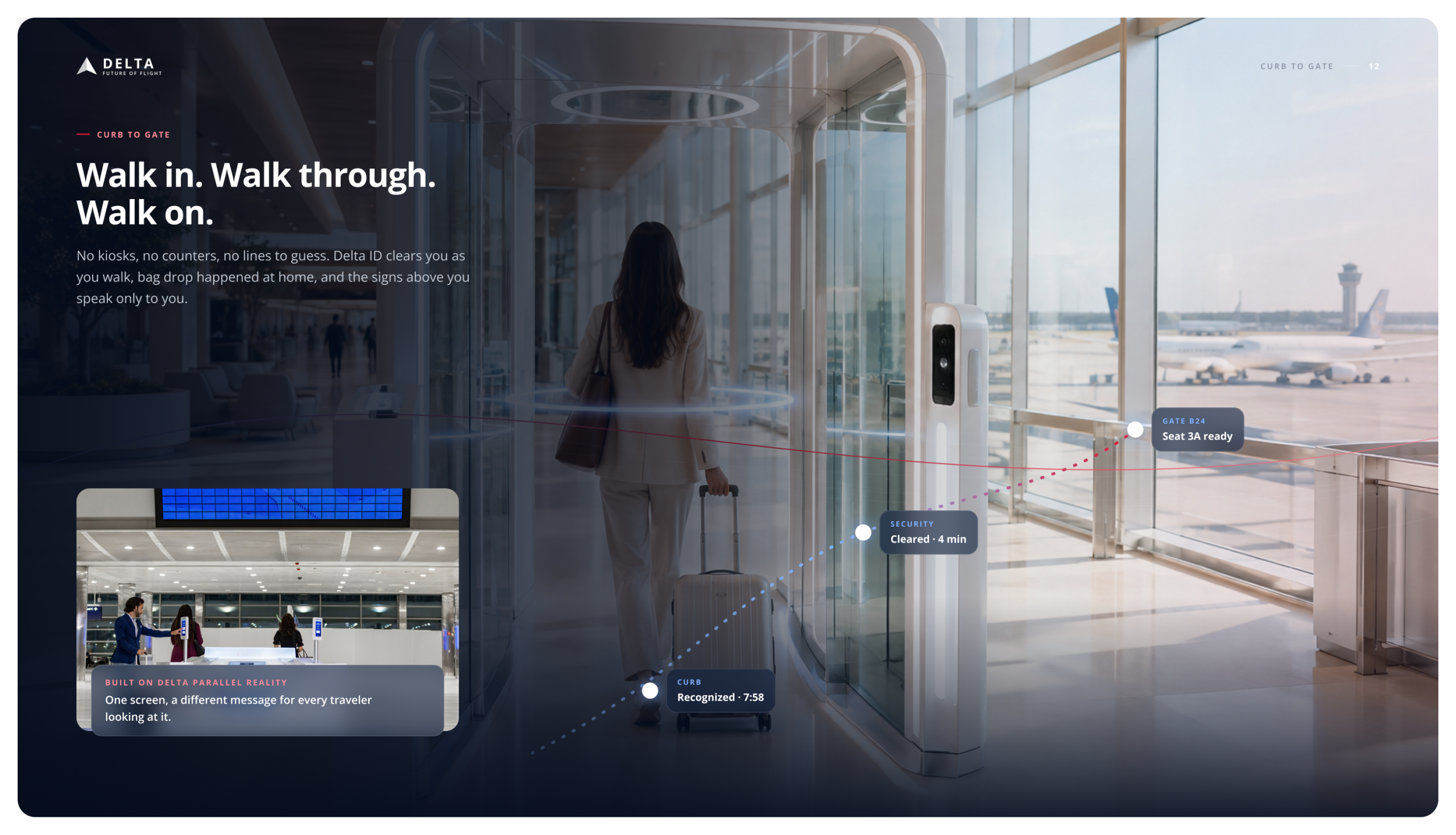
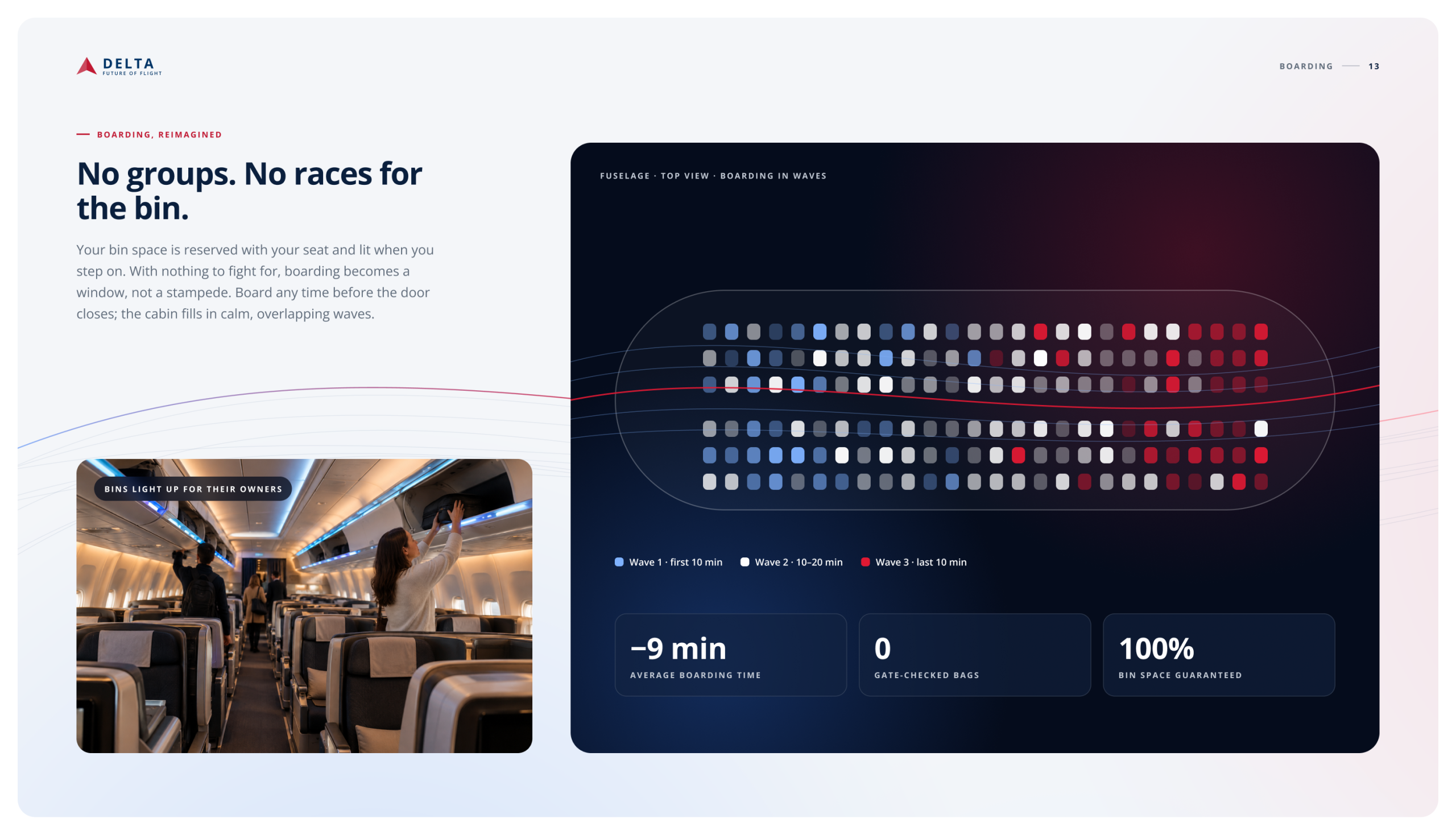
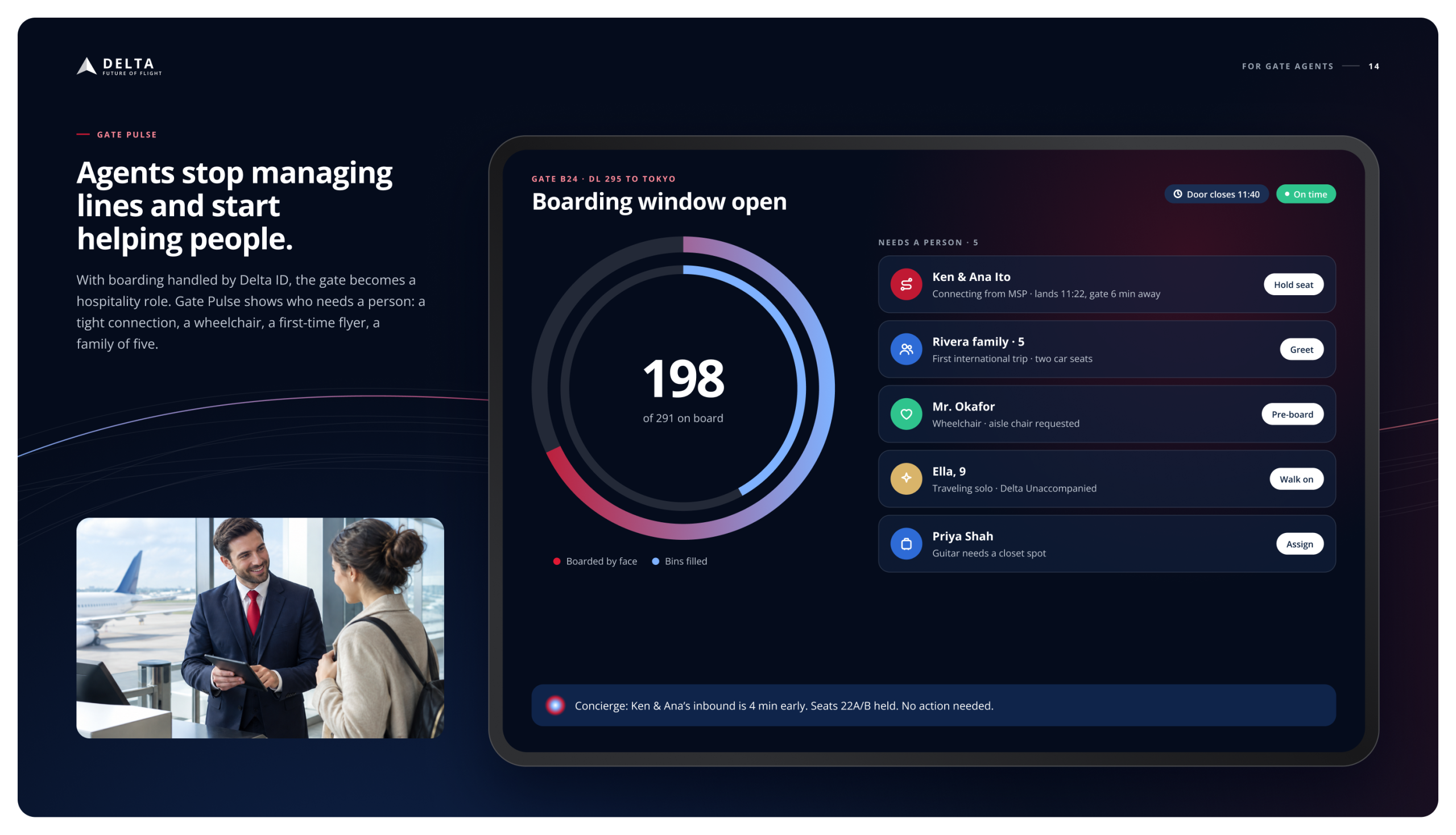
- At the airport: walk through without stopping. Seat and overhead bin space are reserved together, so boarding becomes a window rather than a race.
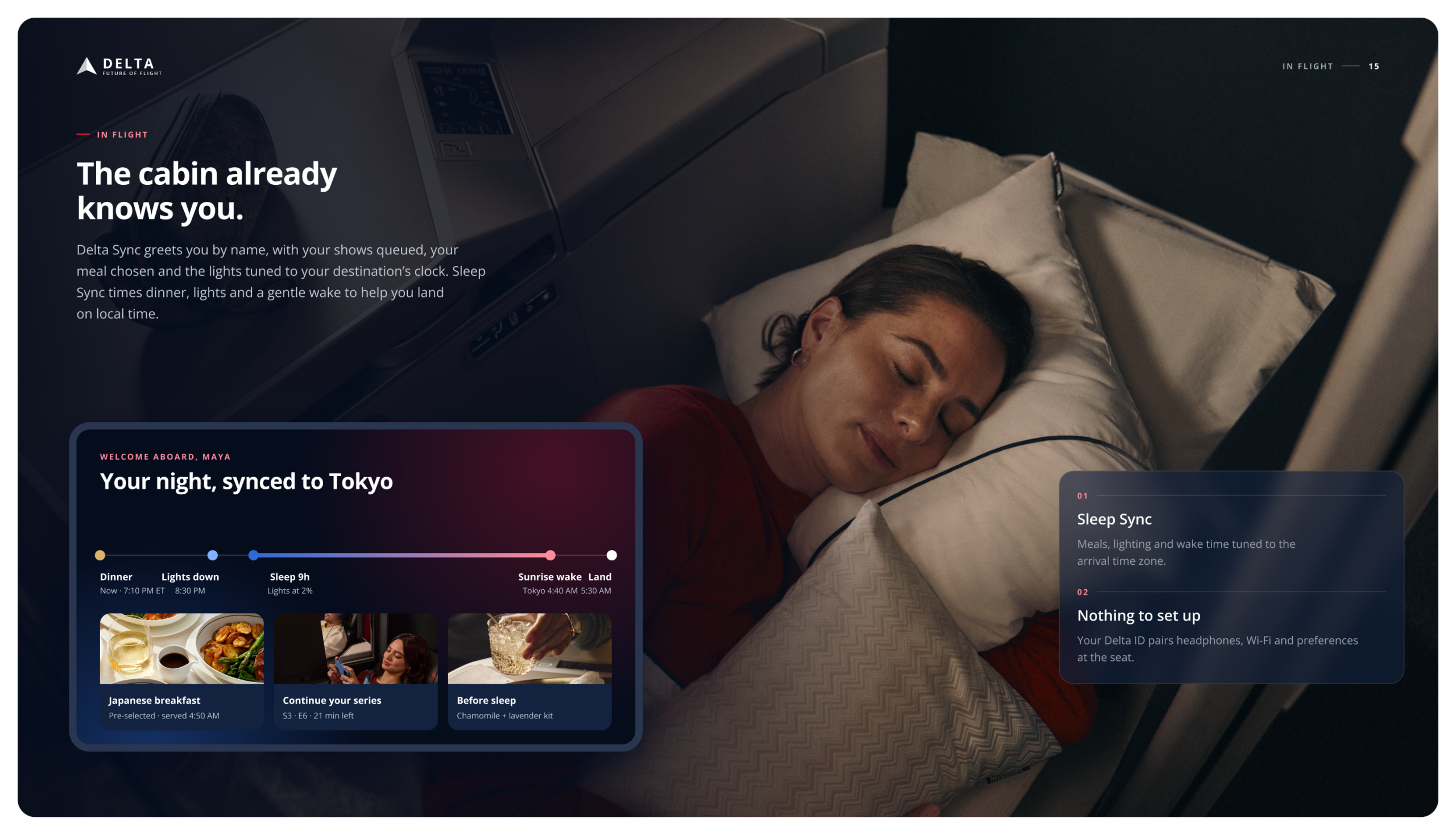
- In the air: the cabin already knows you, and the meal service, lights and wake-up are synced to your destination’s clock.
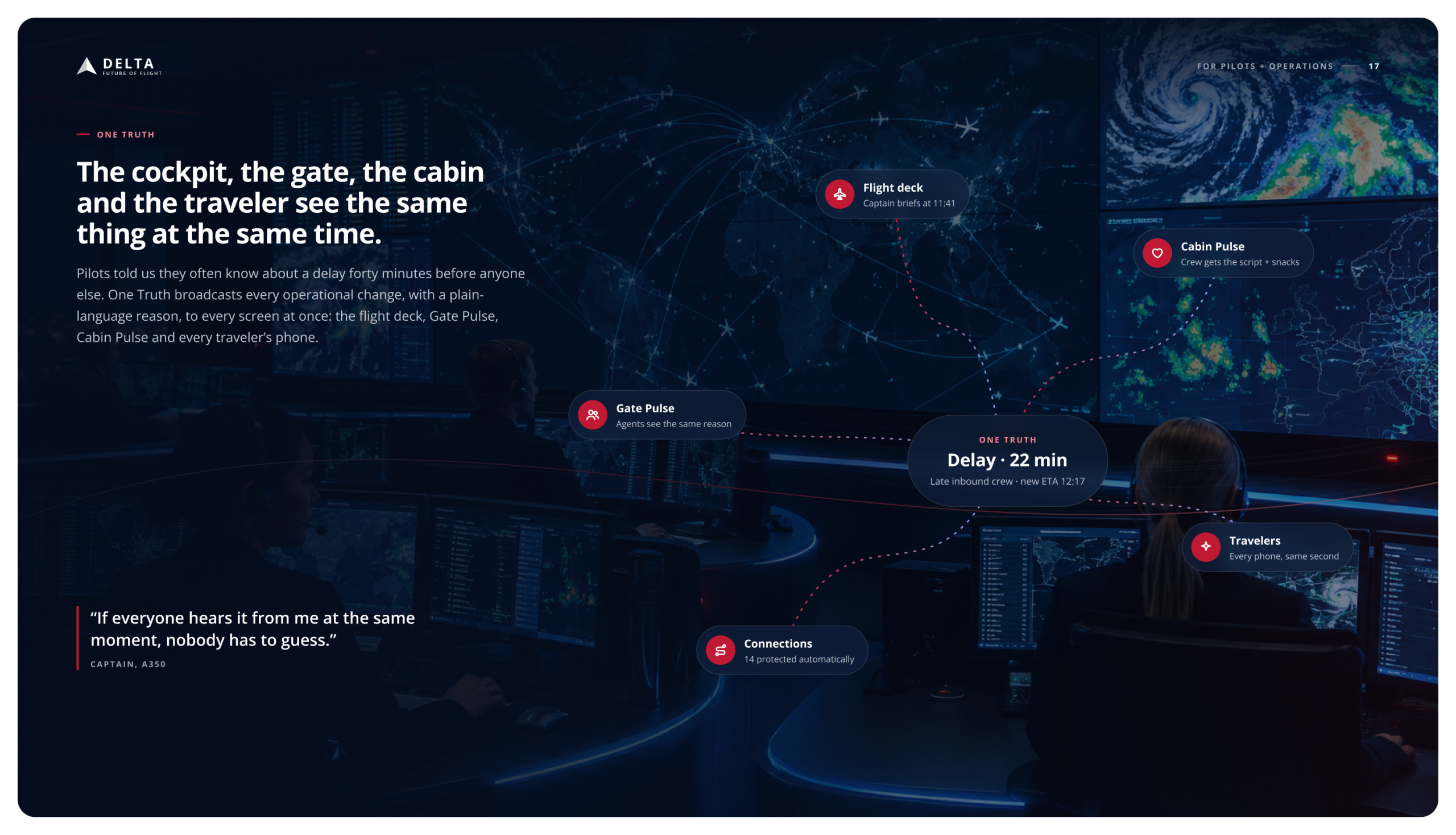
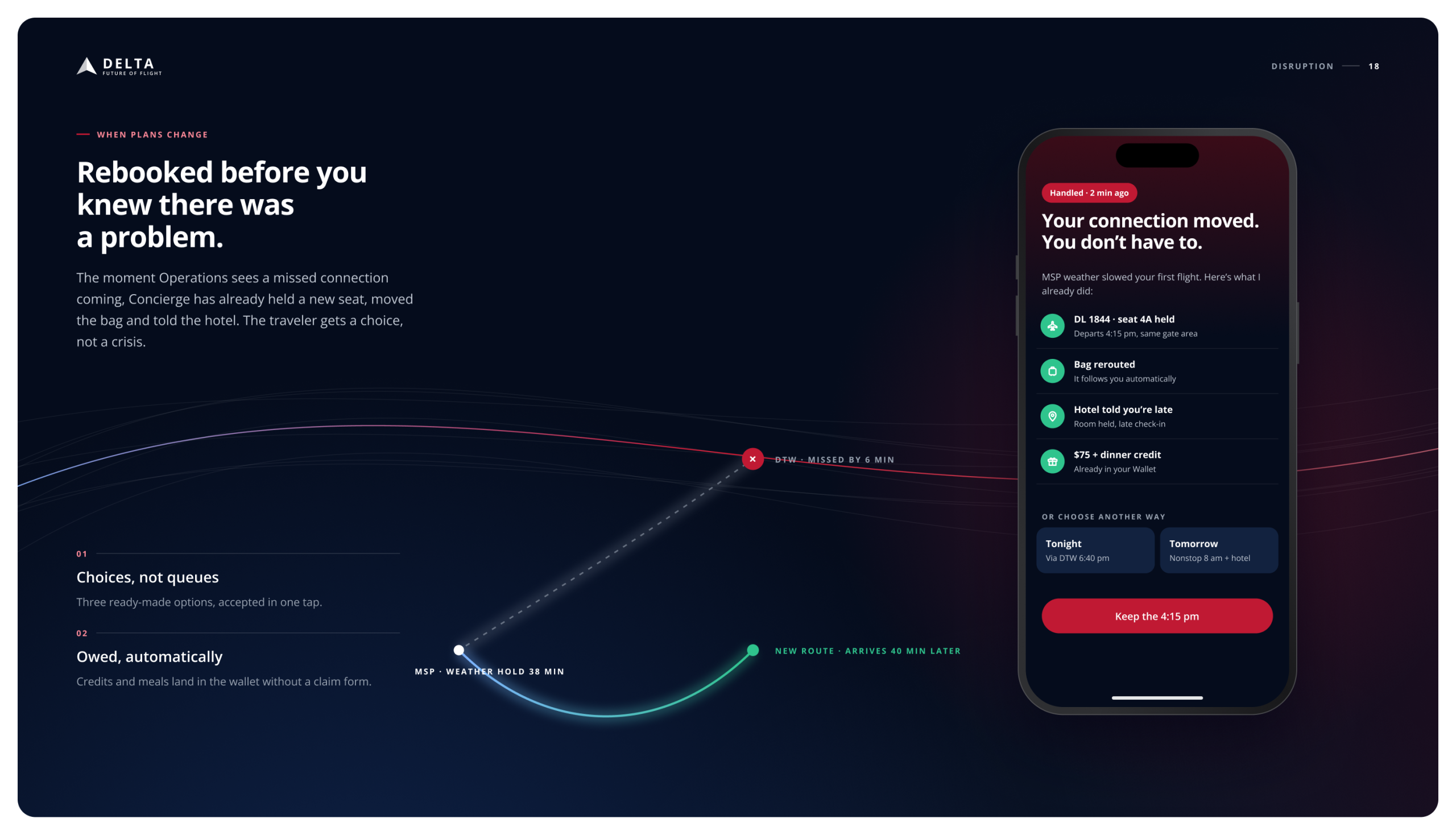
- When something goes wrong: One Truth tells the flight deck, the gate, the cabin and the traveler at the same moment, and Concierge has already rebooked you.
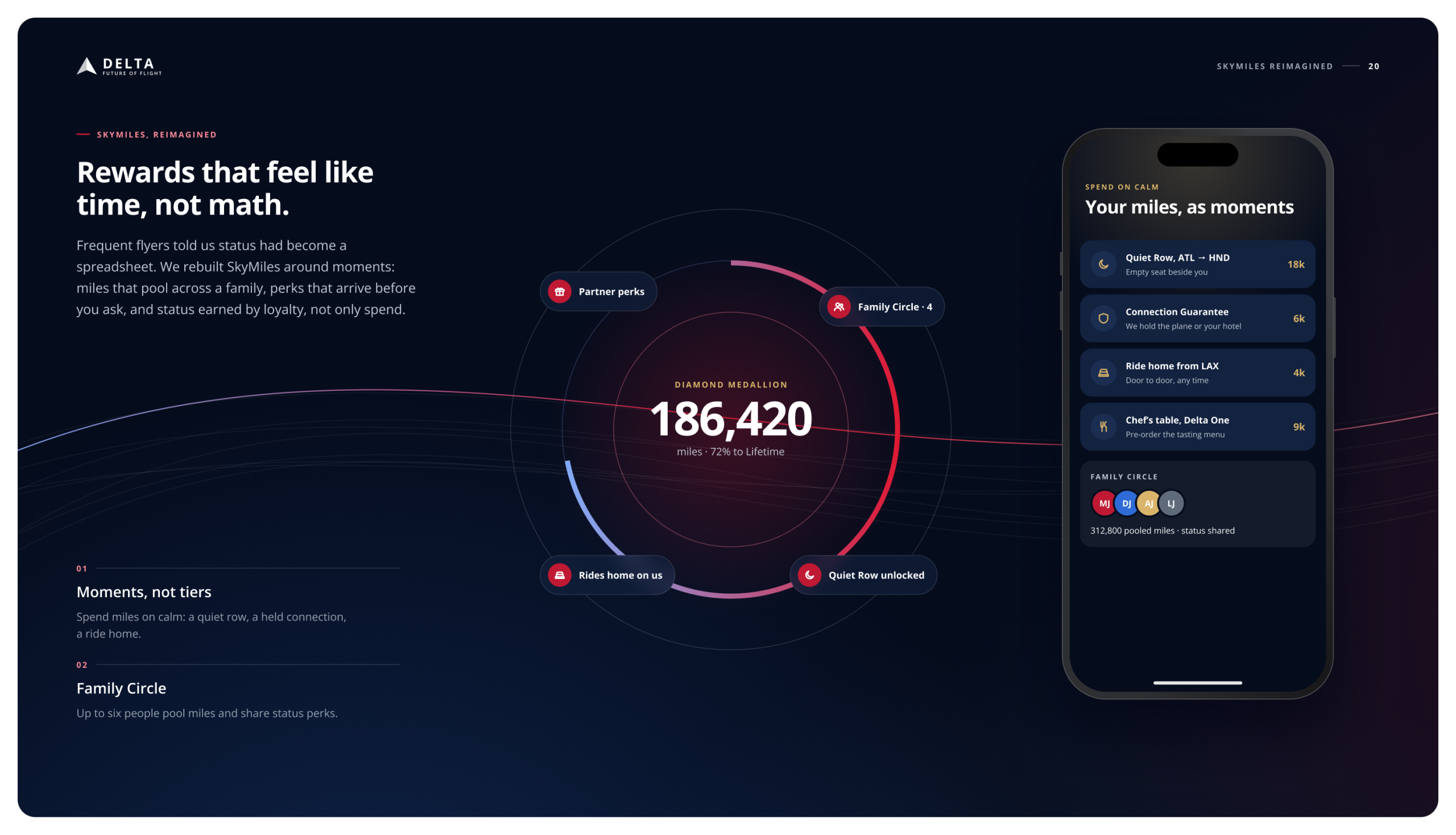
- SkyMiles: rewards become moments, like a quiet row, a held connection or a ride home, with miles that pool across a family.
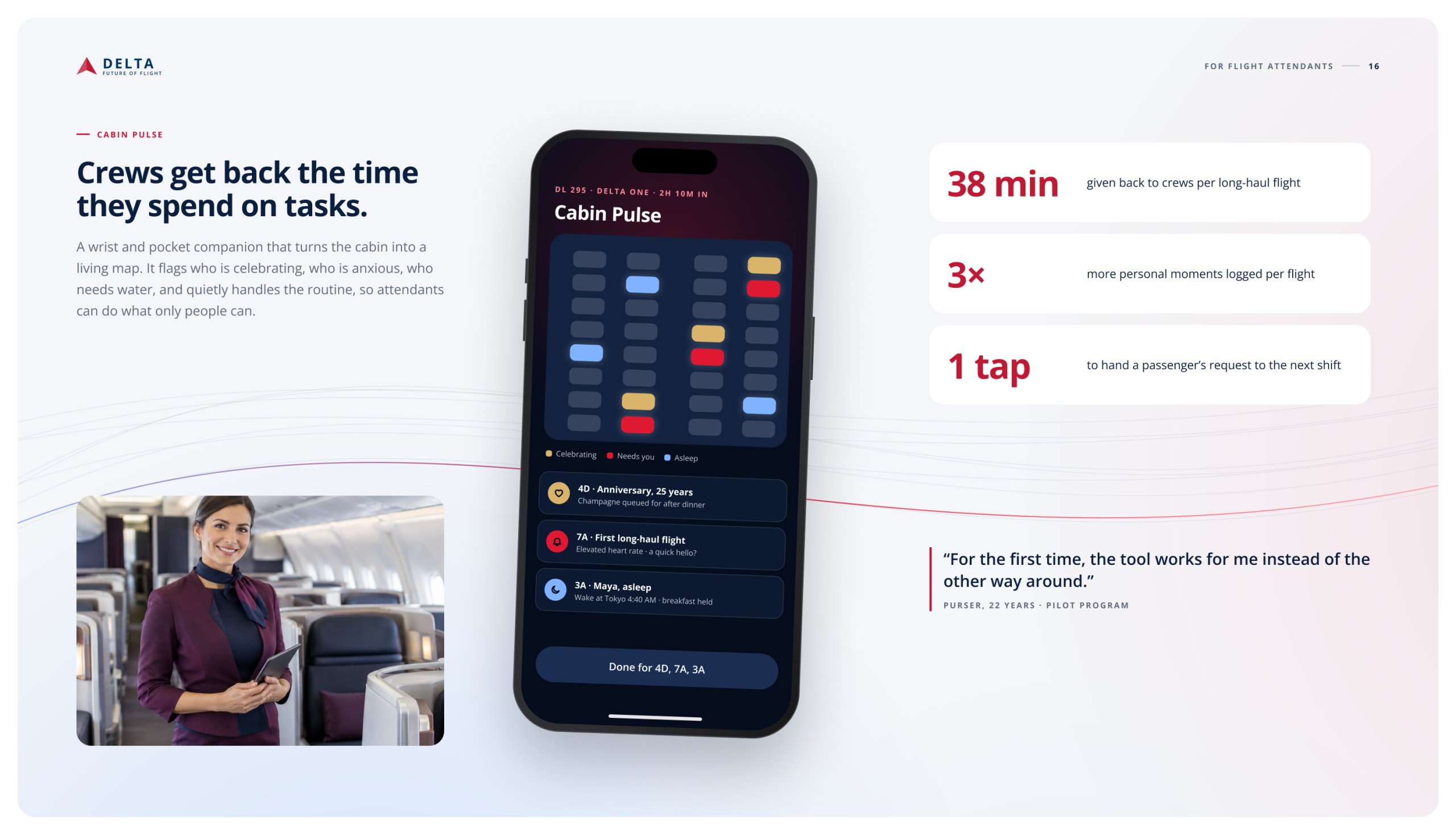
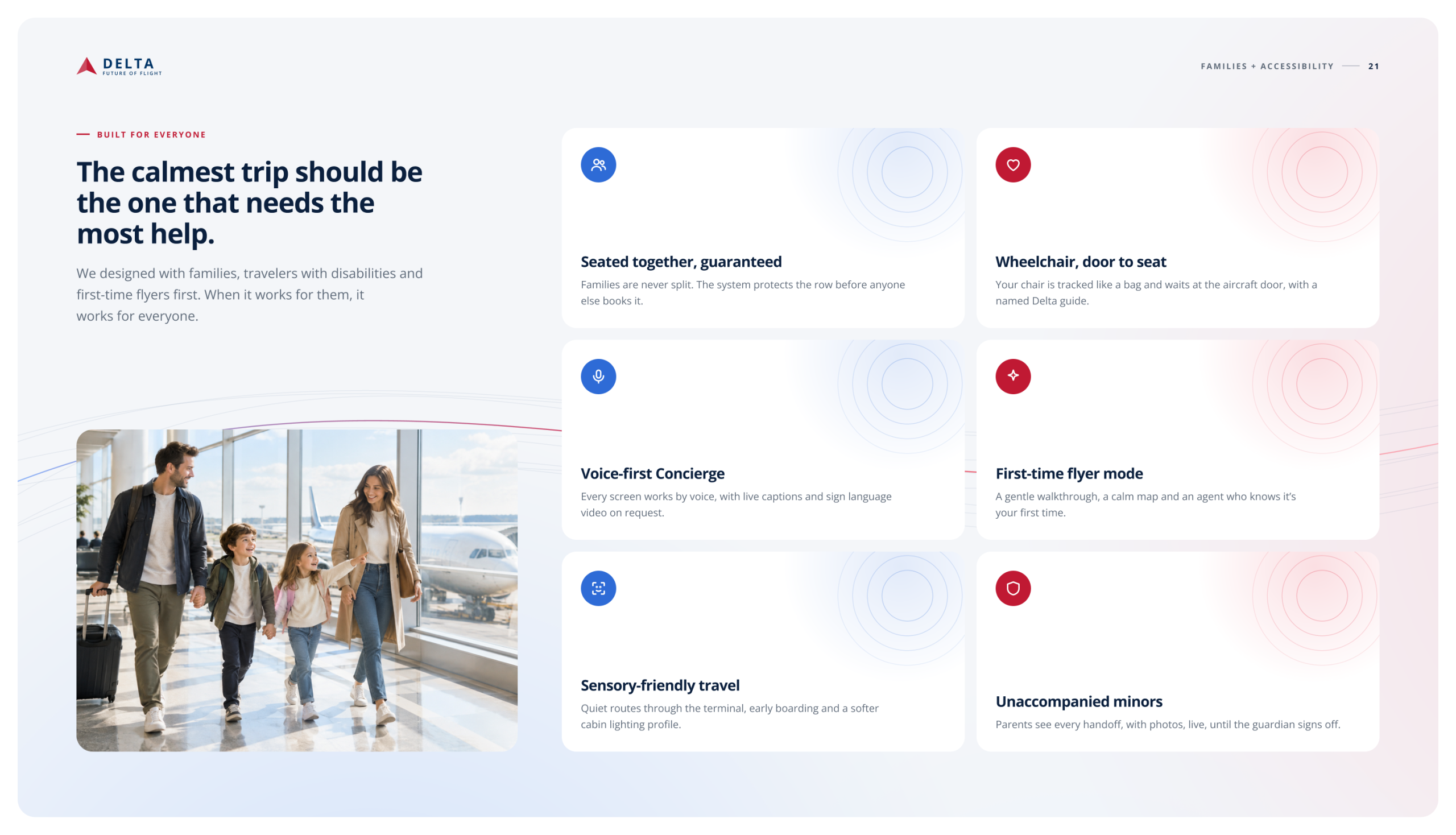
We designed it for the people who need it most: families, travelers with disabilities and first-time flyers. And we designed tools that give crews and agents their time back for the human moments only they can give.