U.S. Army STEM — Be All You Can Build

Category
Product Design, Strategy, WebAbout This Project
The Setup
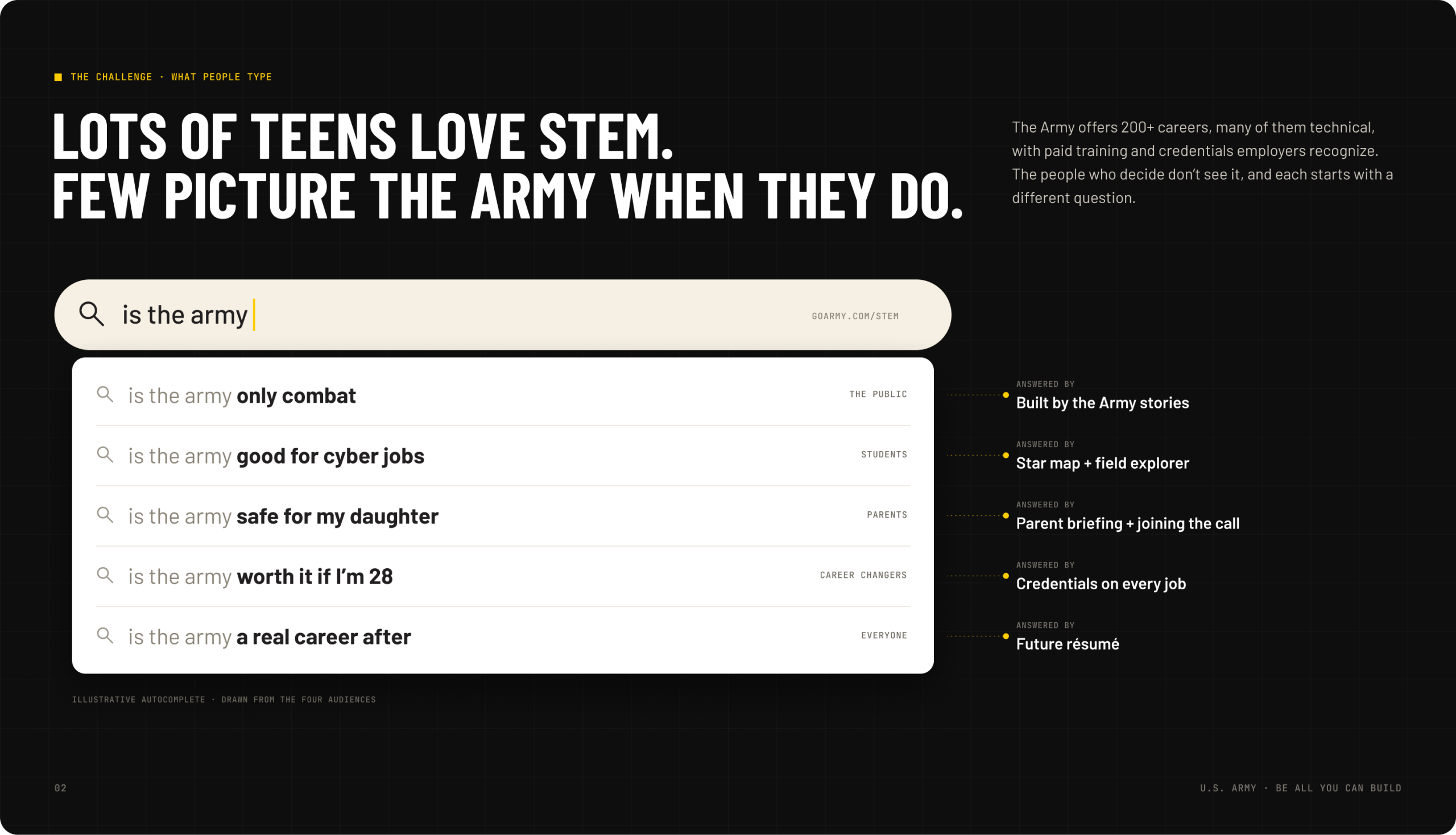
Lots of teens love STEM, but very few picture the Army when they do. The Army offers more than 200 careers, many of them technical, with paid training and credentials employers recognize. The people making the decision just don’t see it.
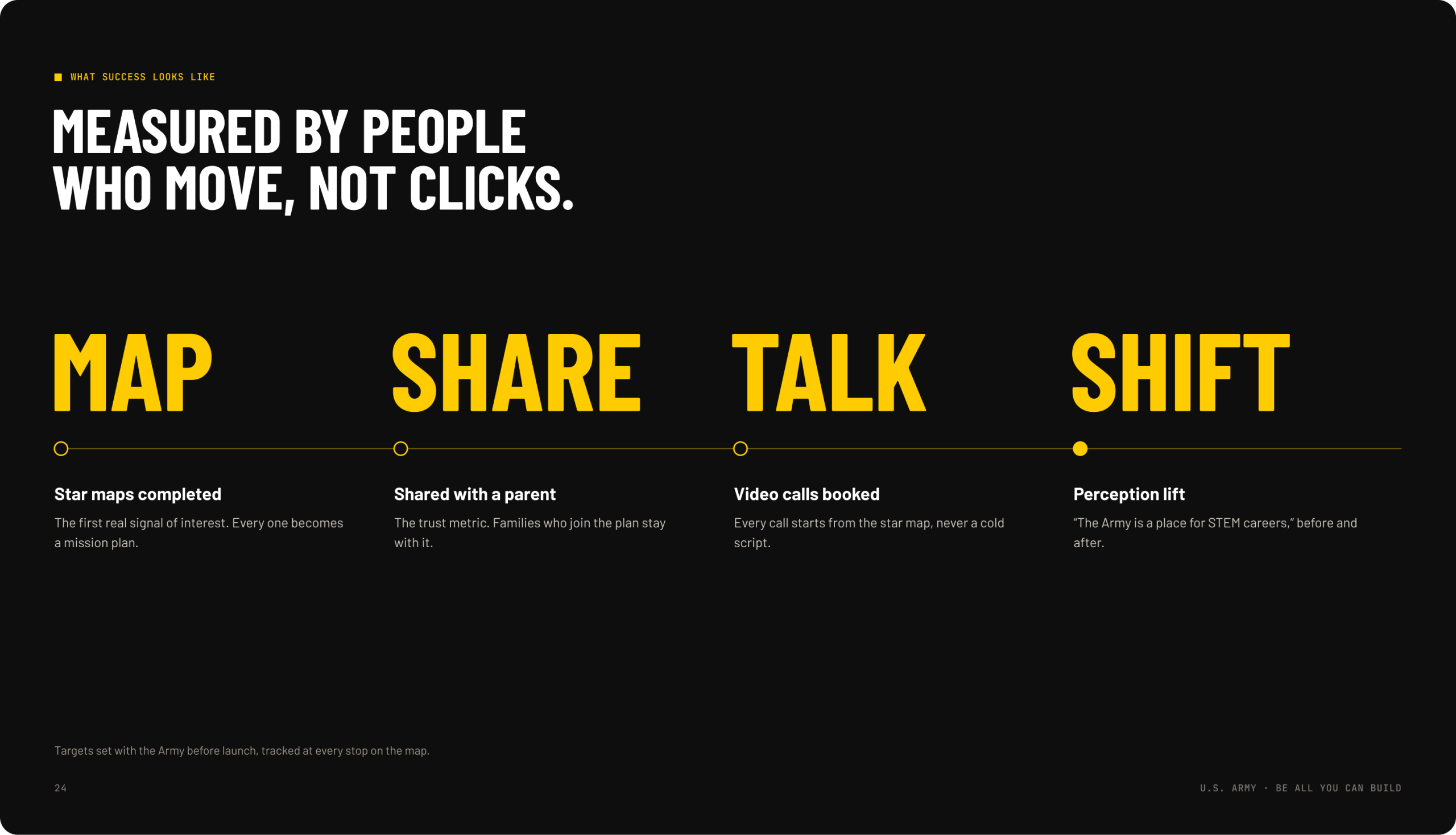
We also weren’t designing for one person. Students ask, “What would I actually do there?” Career changers ask whether it pays off after they leave. Parents ask if it’s safe, and if it’s smart. And the general public still pictures combat first. Each audience shows up with a different first question, and each one needed its own answer. The goal was to raise awareness of Army STEM careers, shift how people perceive the Army, and turn that interest into real conversations with recruiters who know the field.
What I Led
I led the design of the end-to-end experience — concept, experience strategy, UX and visual design — from the first coded poster someone spots near campus to a video call with a recruiter who already knows what they’re interested in.
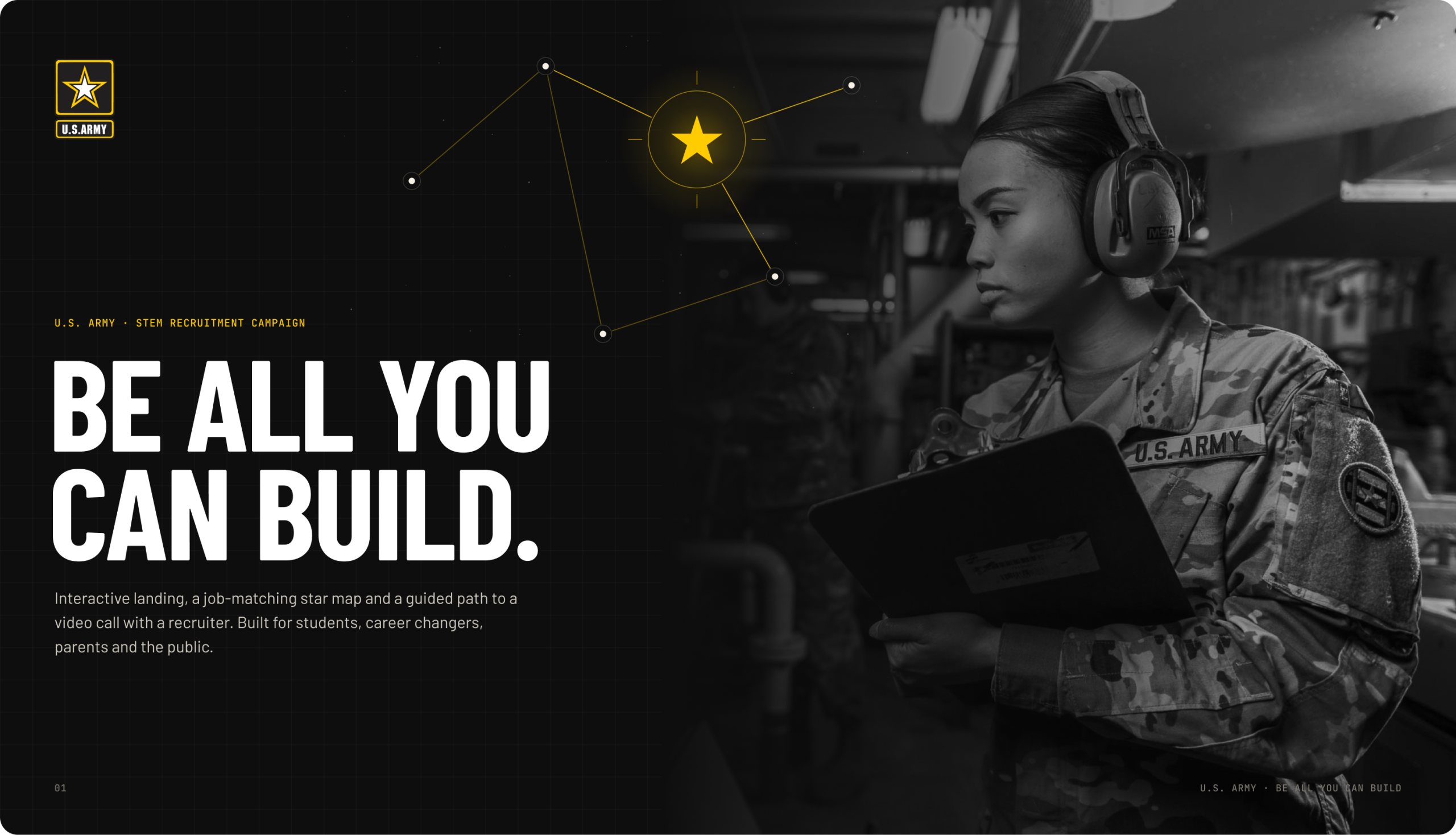
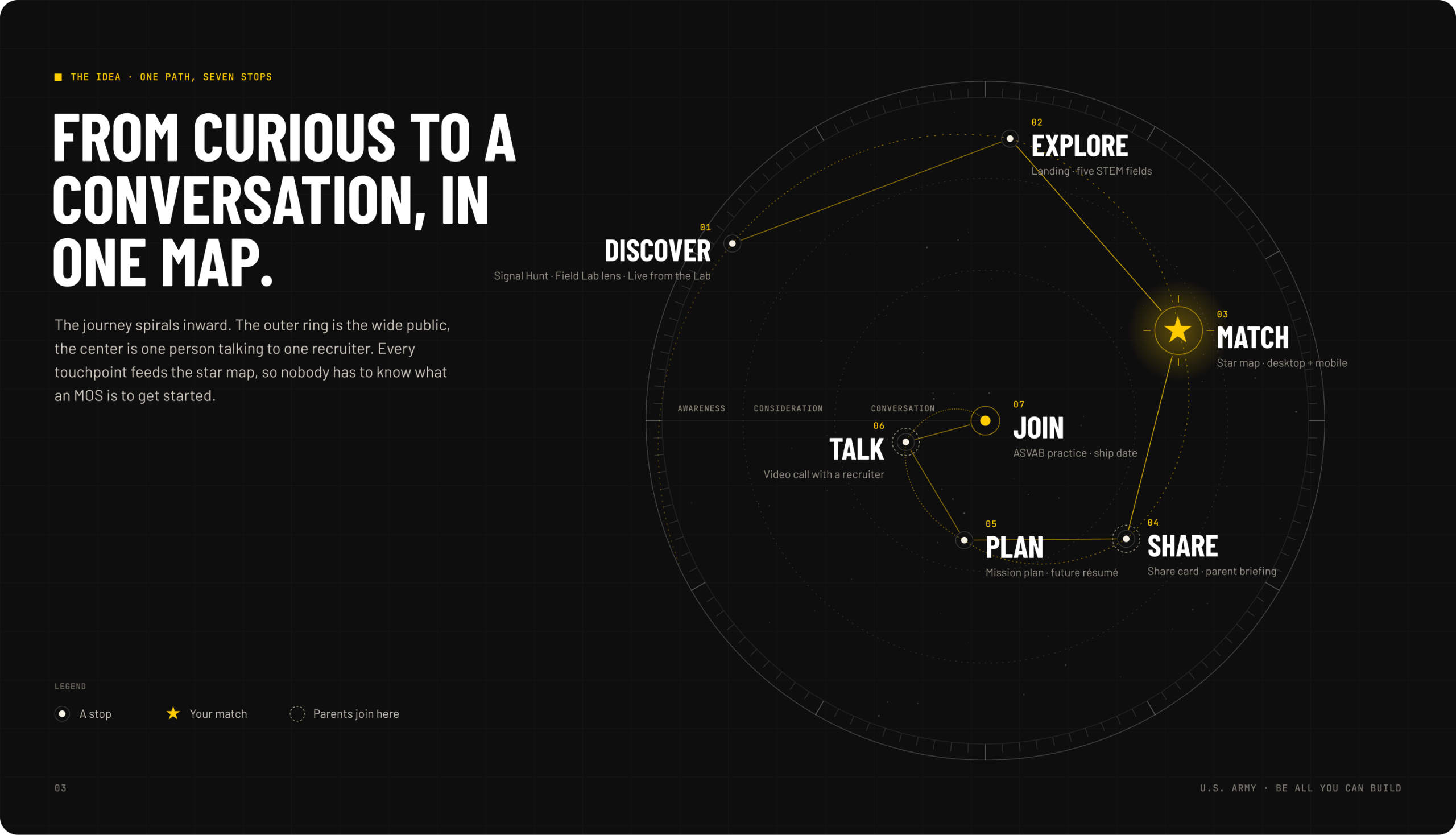
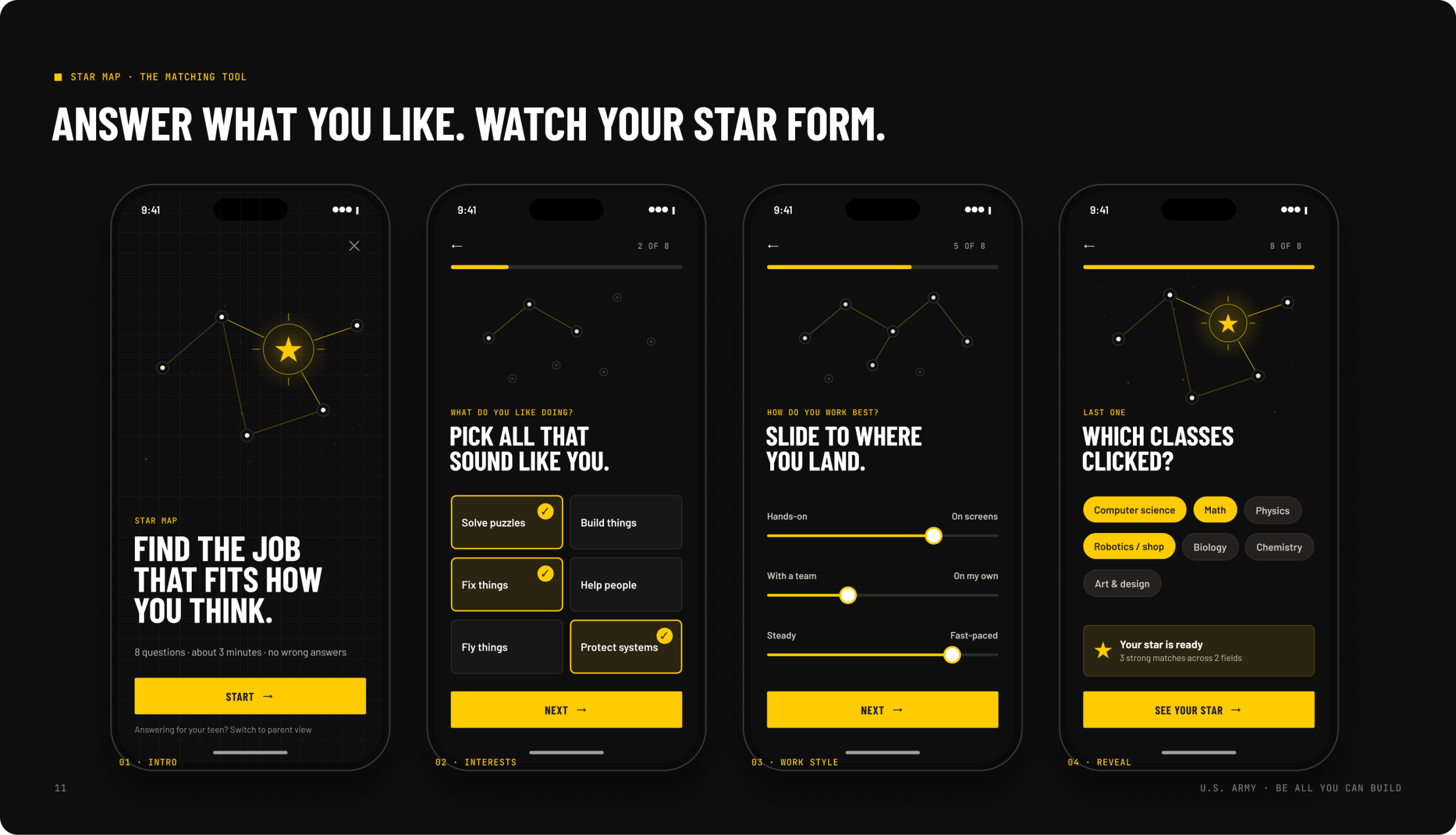
The idea was to turn the Army star into a star map. Every answer someone gives lights a node, and the job that fits them best becomes the star at the center of their own constellation. Nobody has to know what an MOS is to get started; they just tell us what they like doing, and the map does the translating. That star map became the thread through the whole campaign: it shows up on the landing page, the results, the share card a student sends home, and the recruiter call itself. The journey spirals inward, from the wide public on the outside to one person talking with one recruiter at the center — discover, explore, match, share, plan, talk, join.
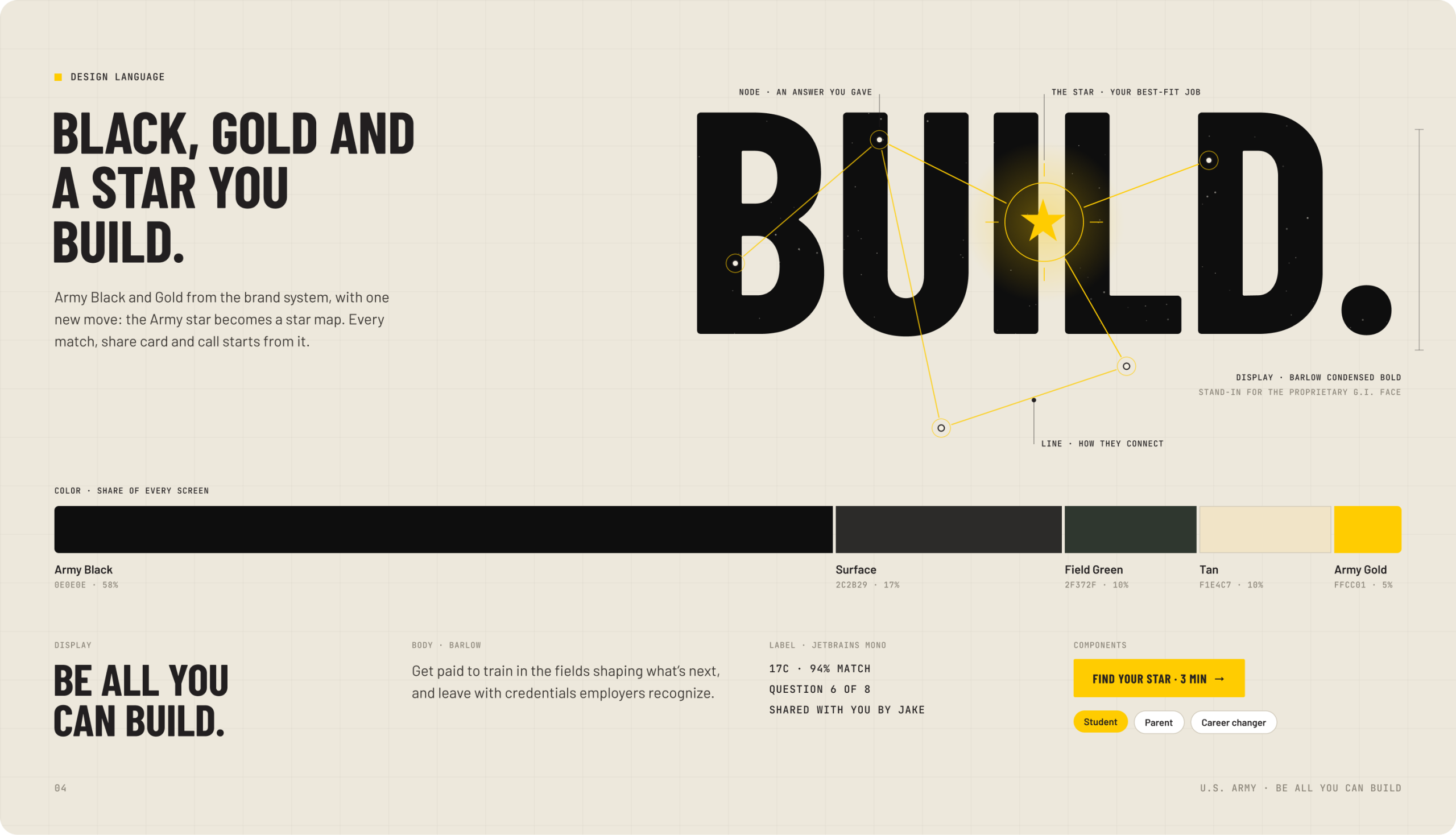
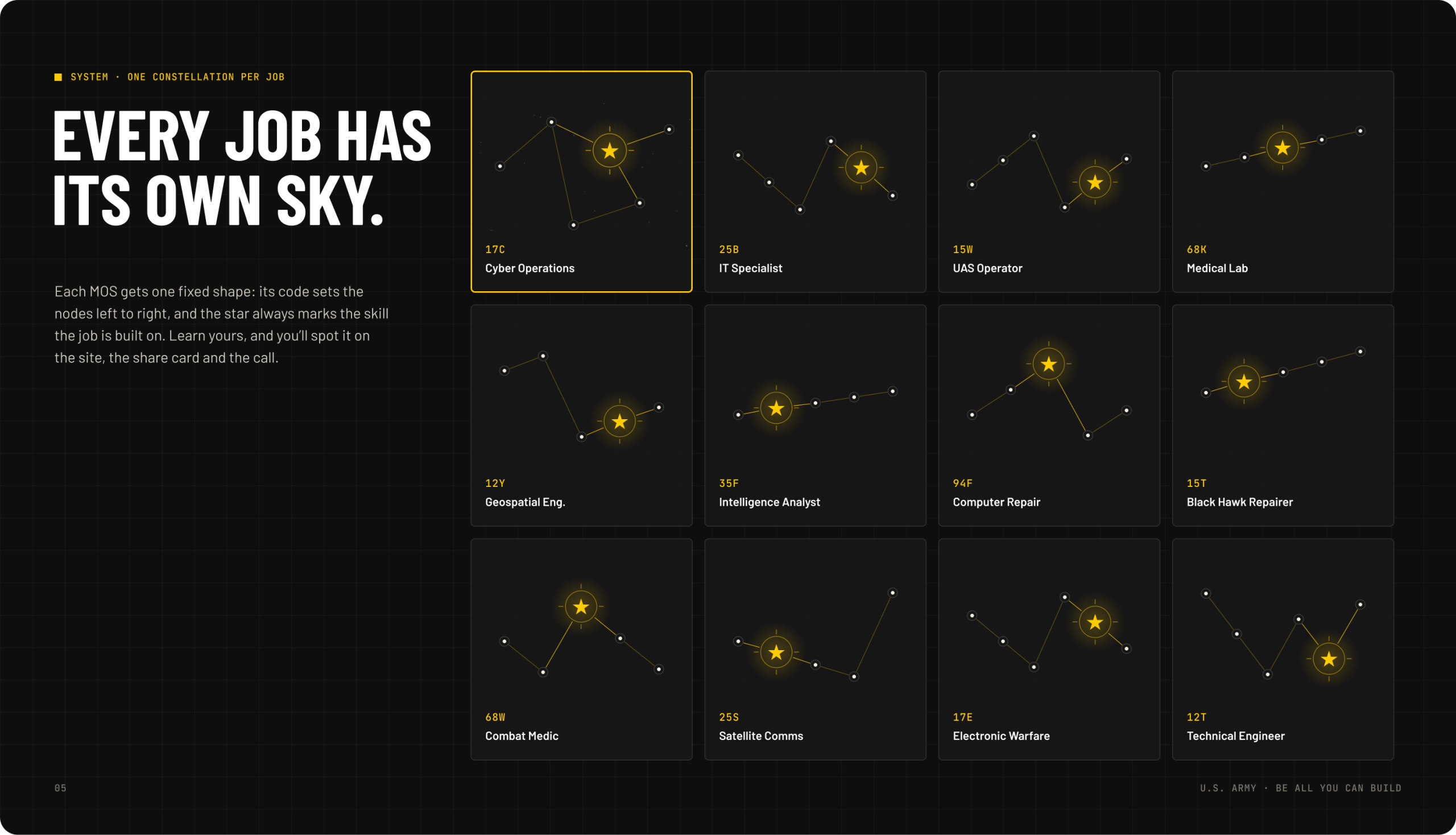
The design language starts from the Army’s own system of Army Black and Army Gold, and adds one new move: the star becomes a map. Every MOS gets one fixed constellation shape, drawn like a celestial chart — hairline connections, small points with faint rings, and a gold star held inside a fine sight ring — so once you learn yours, you recognize it everywhere. Army Black carries most of every screen, with warm surfaces and Field Green for depth and Tan softening the parent-facing pieces; Army Gold is held back for the things that matter: the star, the next action and the match. Photography shows real soldiers doing real technical work, hero images in high-contrast black and white so the gold reads instantly, recruiters and supporting moments in color to keep them human. Type pairs a condensed, all-caps display face with the confidence of a recruiting poster, a clean sans for body copy, and a monospaced label style for job codes, match scores and system details.
What We Delivered
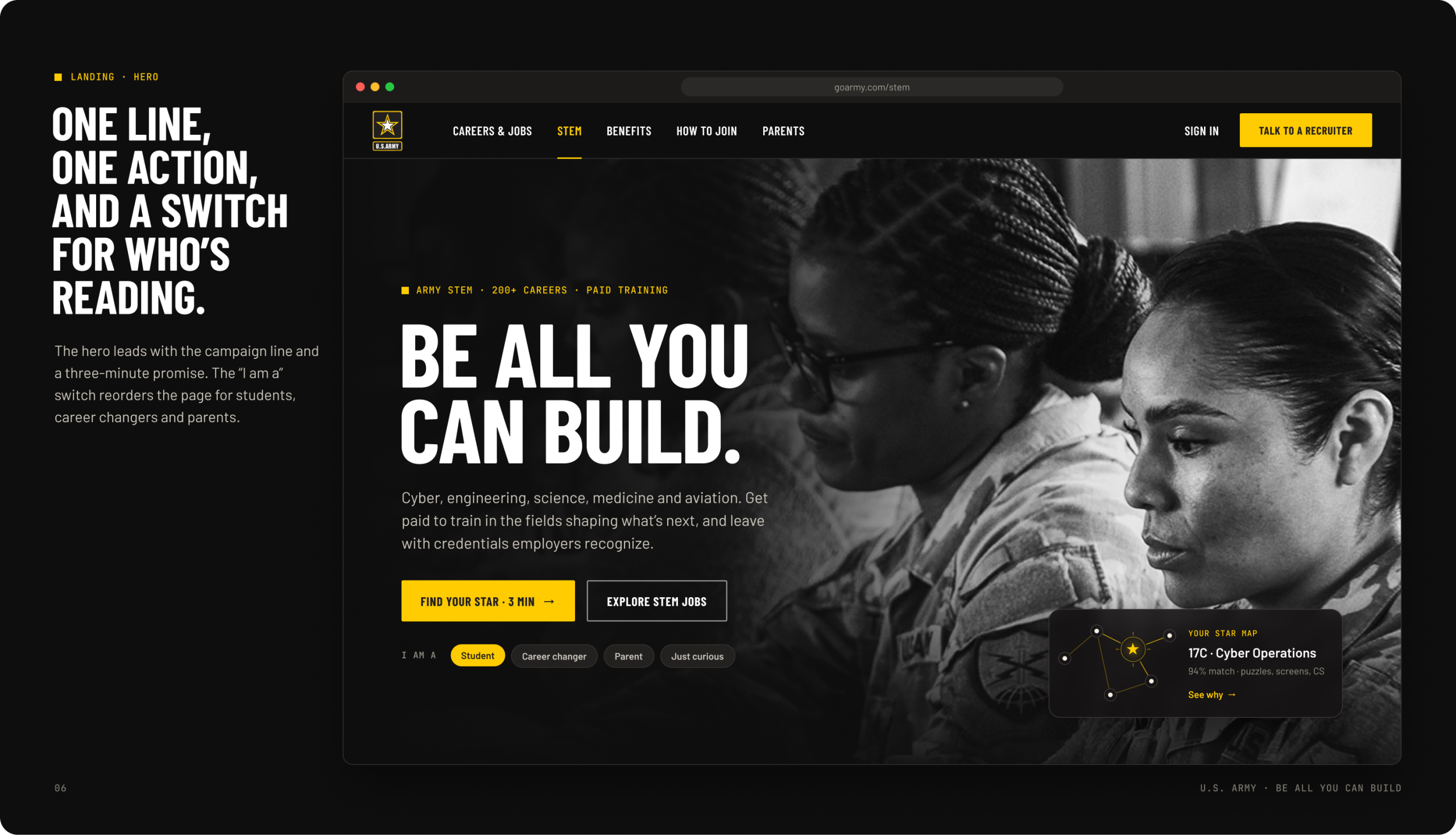
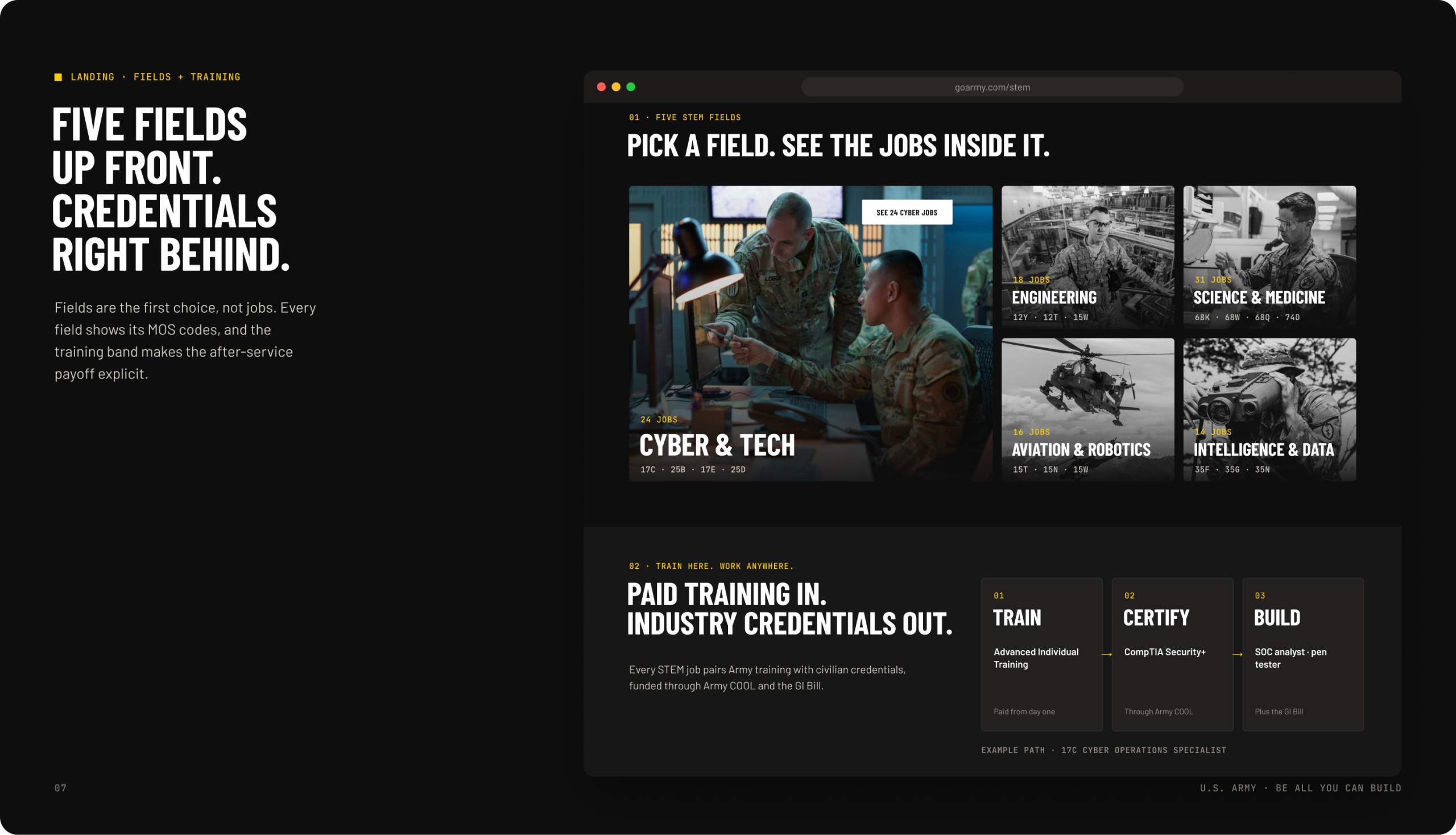
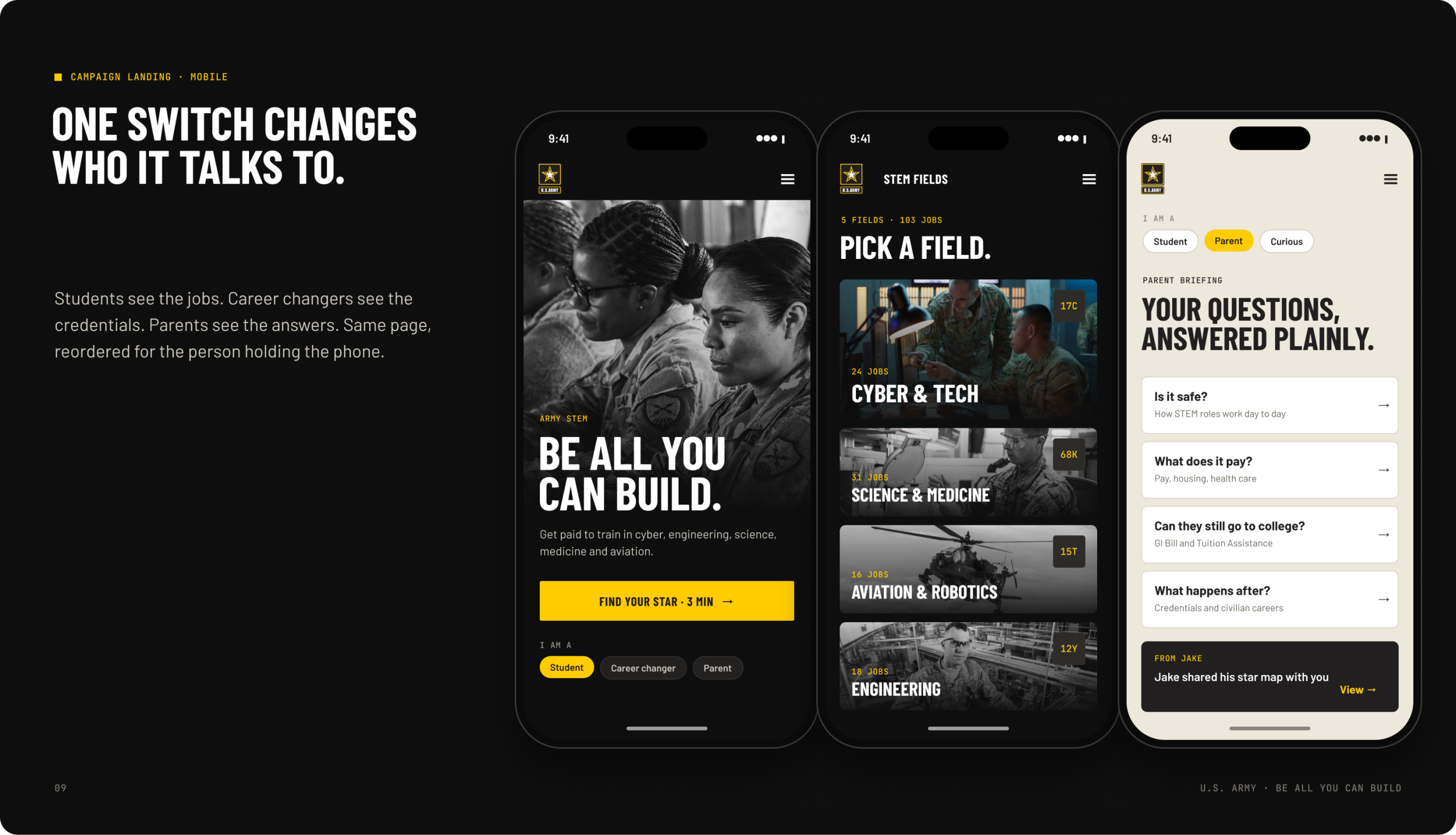
- Campaign landing. The hero leads with the campaign line and a three-minute promise. An “I am a” switch reorders the page for students, career changers and parents, so the person holding the phone sees their own answers first.
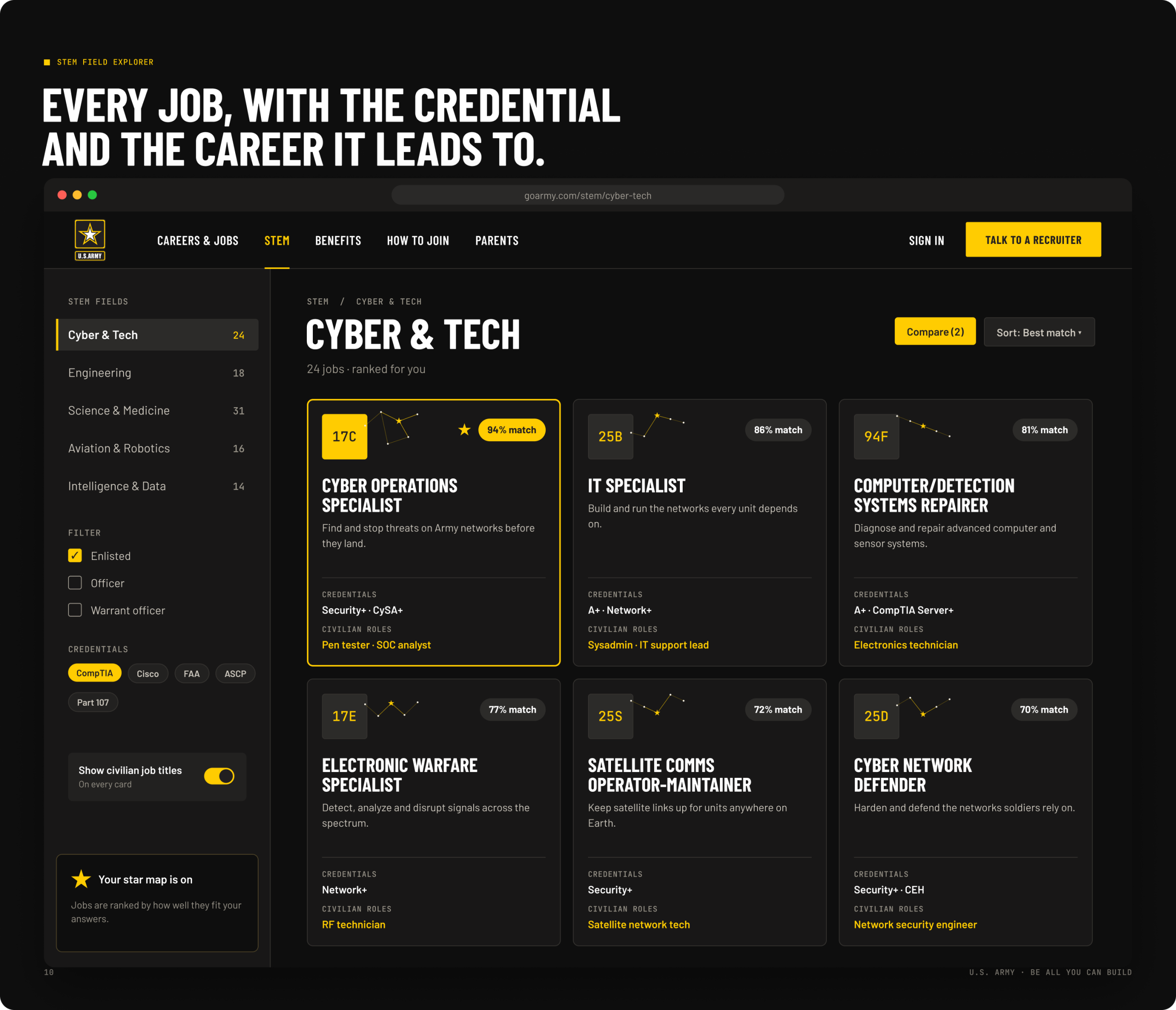
- Field explorer. Five STEM fields — cyber, engineering, science, medicine and aviation — open into the jobs inside them. Every job card pairs the Army role with the credentials it trains to and the civilian titles it leads to, ranked by how well each one fits the person’s star map.
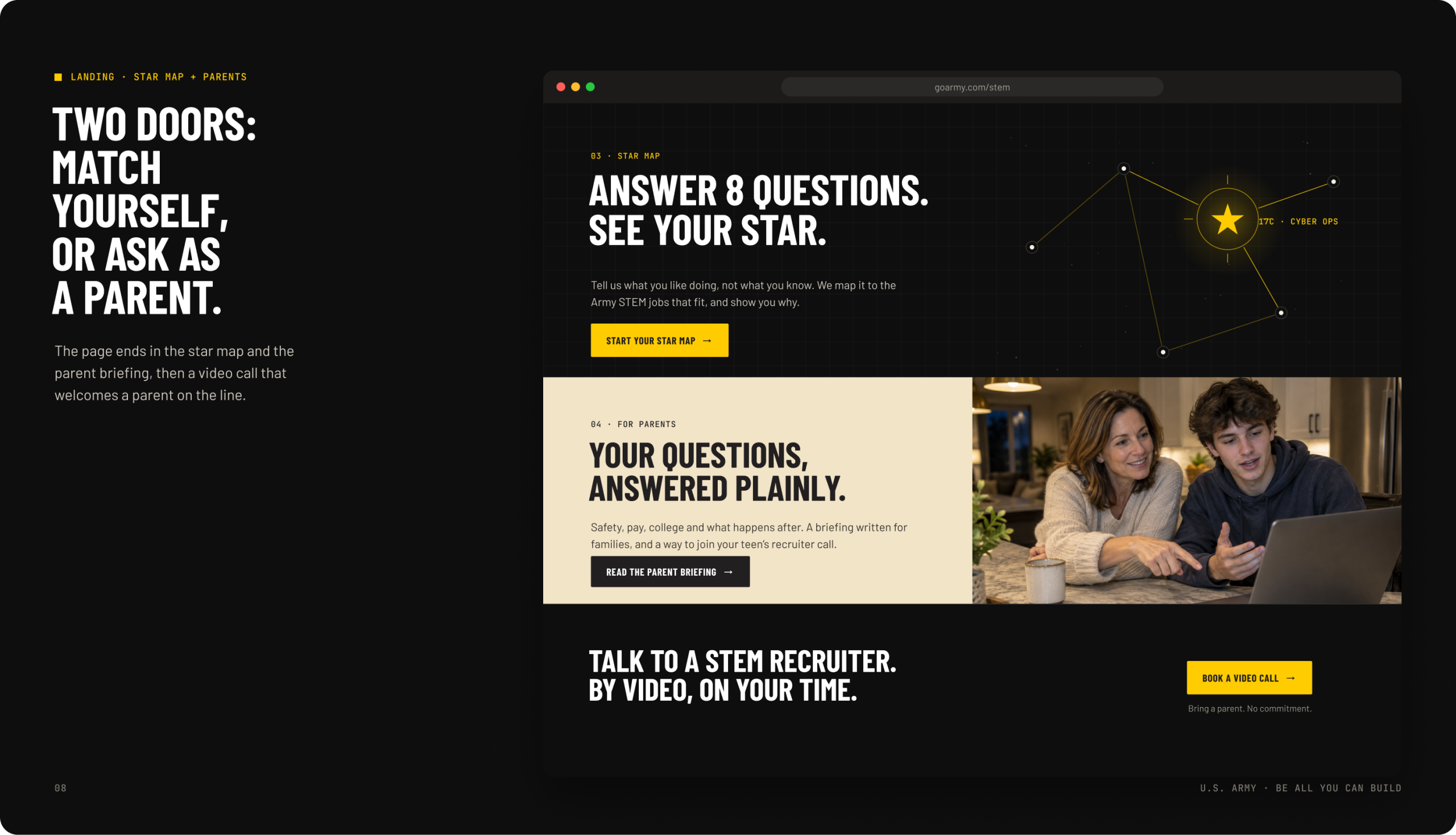
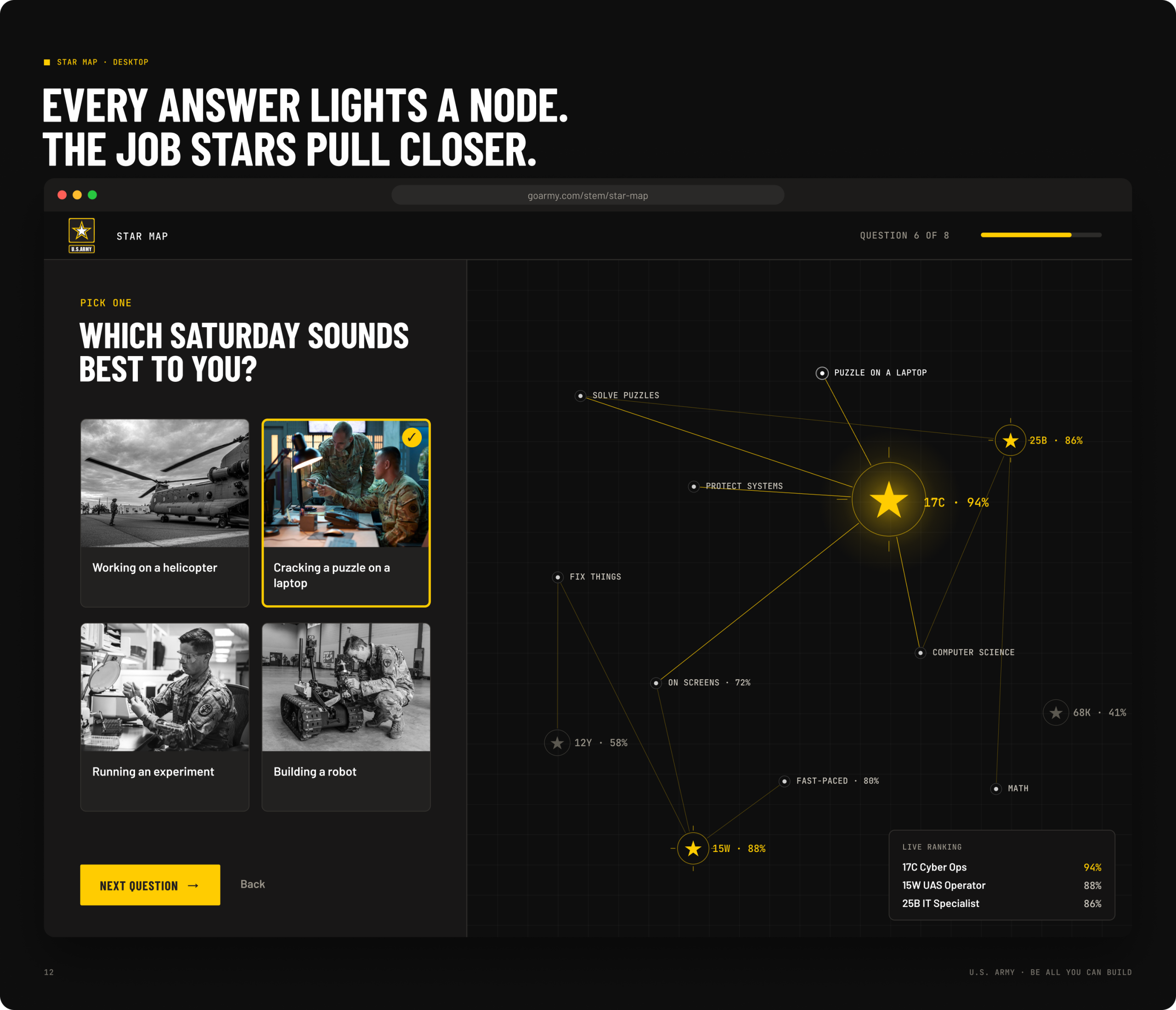
- Star map. Eight quick questions about what you like doing, how you work and which classes clicked. On desktop the constellation forms live beside the questions and the job stars pull closer with every answer; on mobile the map builds across the flow and ends with a reveal.
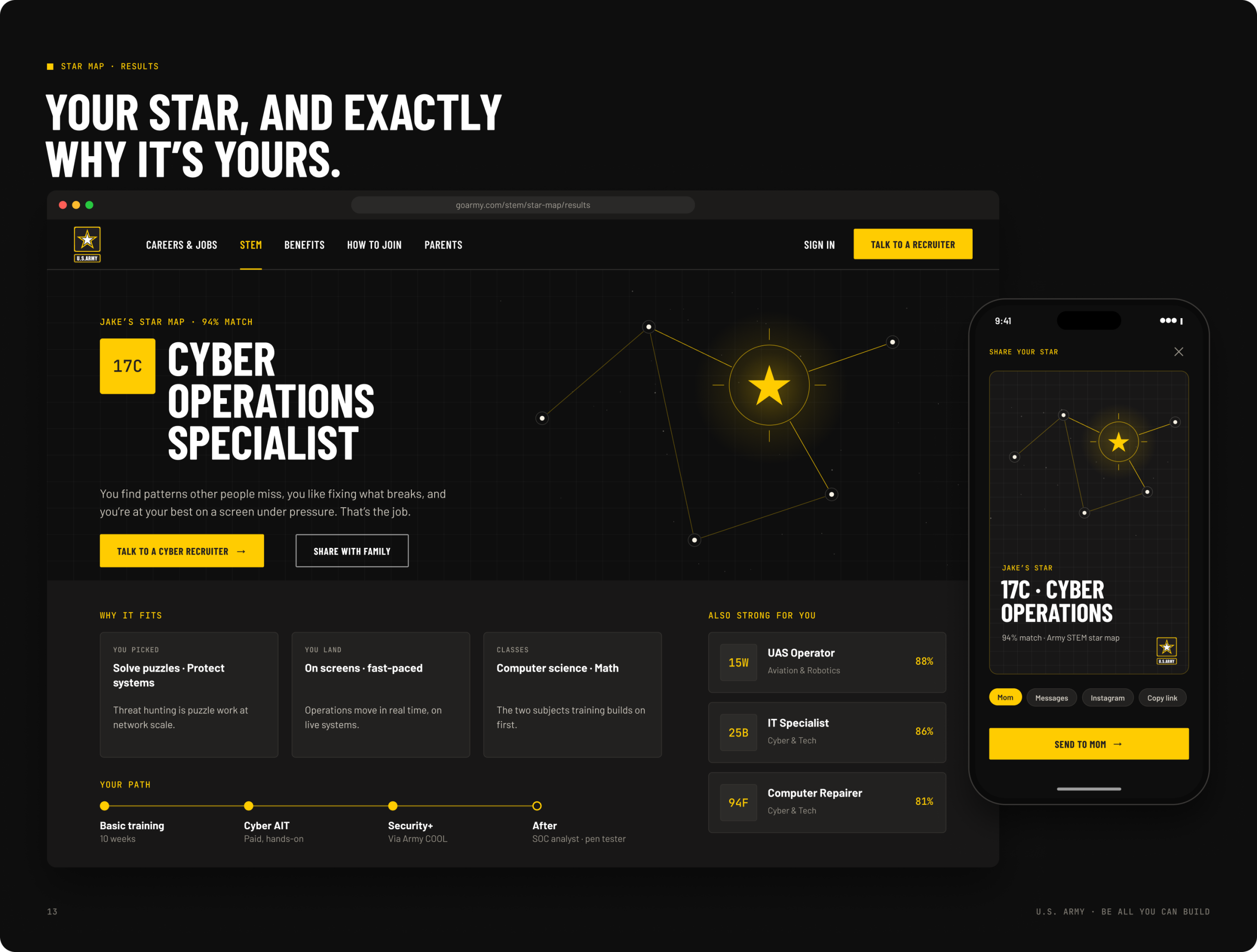
- Match results. Your star, and exactly why it’s yours, explained in plain language — with the path from basic training to a civilian career, and a share card built to be sent home.
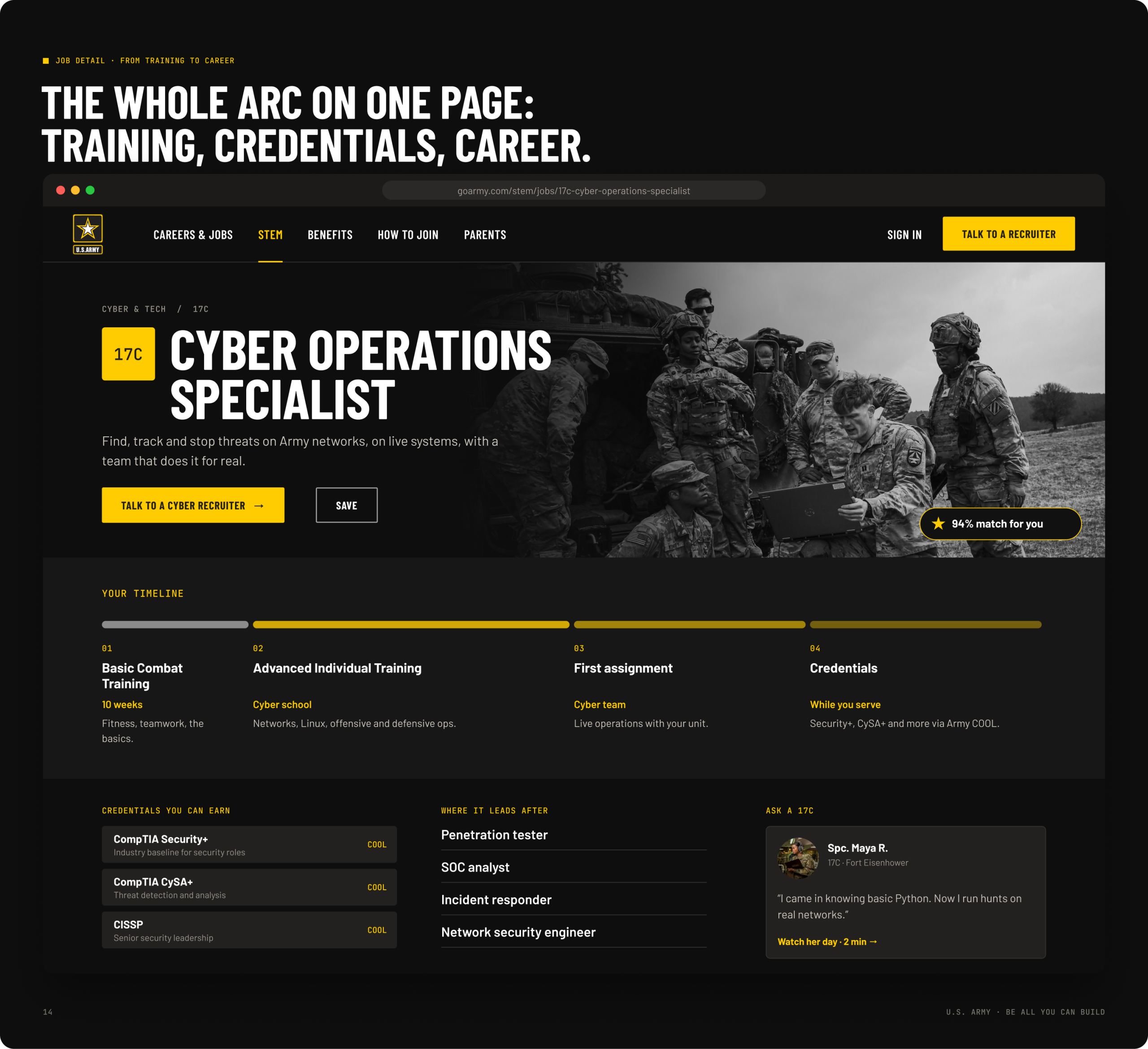
- Job detail. The whole arc on one page: a timeline from Basic Combat Training through Advanced Individual Training to the certifications earned while serving, alongside a short video from a soldier already in the job.
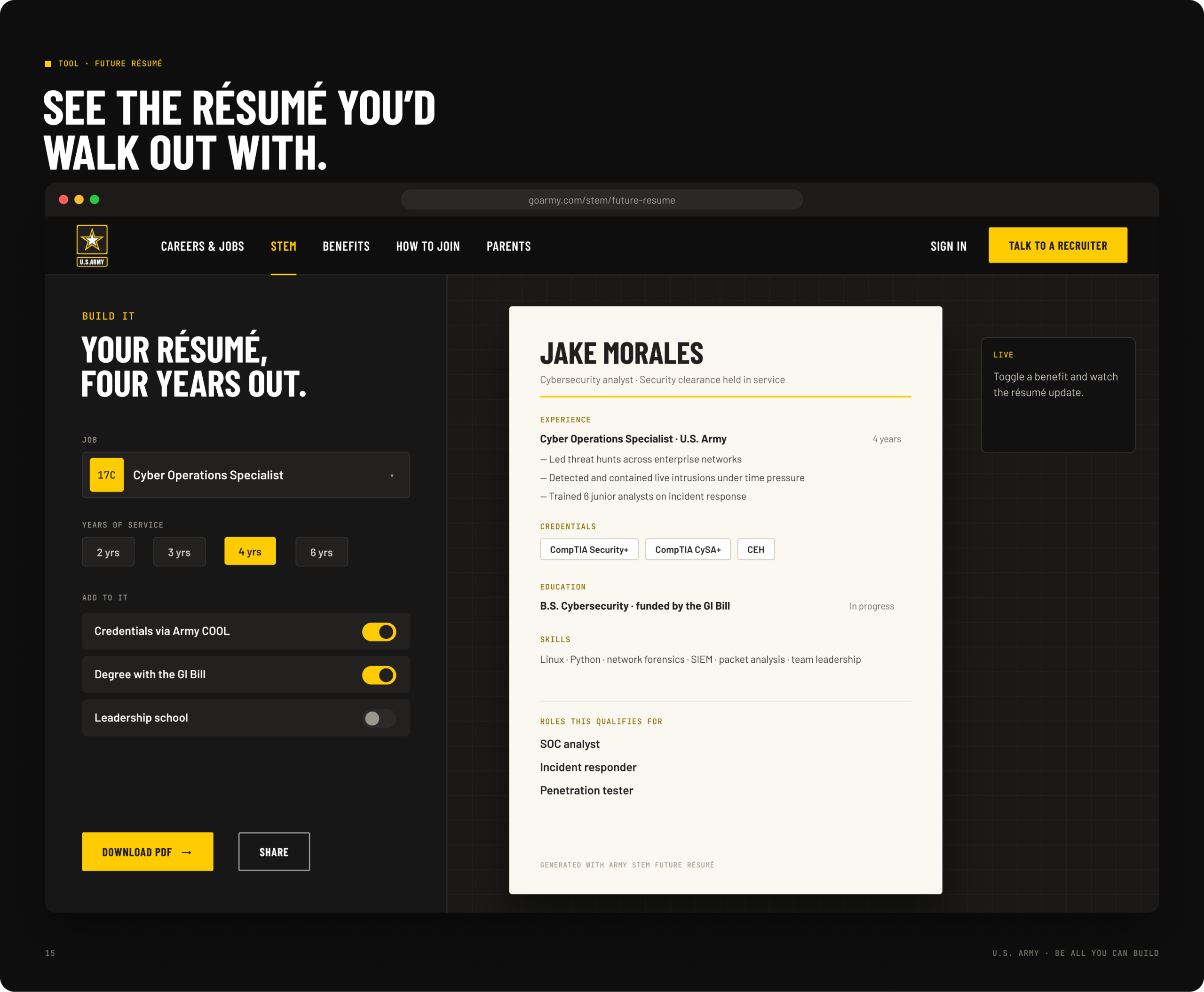
- Future résumé. The résumé you’d walk out with four years later — credentials through Army COOL, a degree with the GI Bill, leadership school. It answers the career changer’s question directly.
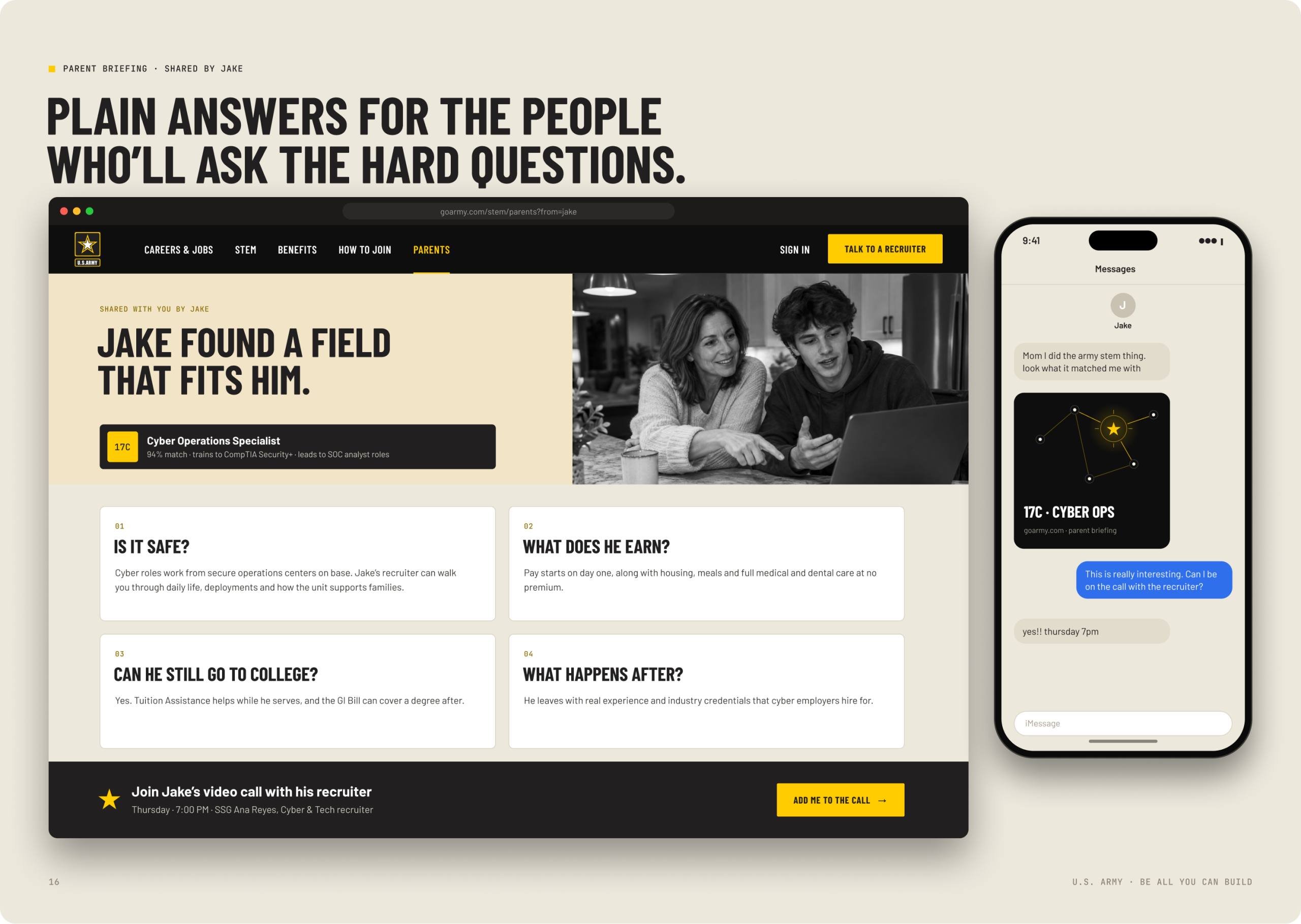
- Parent briefing. When a student shares their match, their parent gets a briefing written for families: plain answers on safety, pay, college and what happens after, plus an invitation to join the recruiter call.
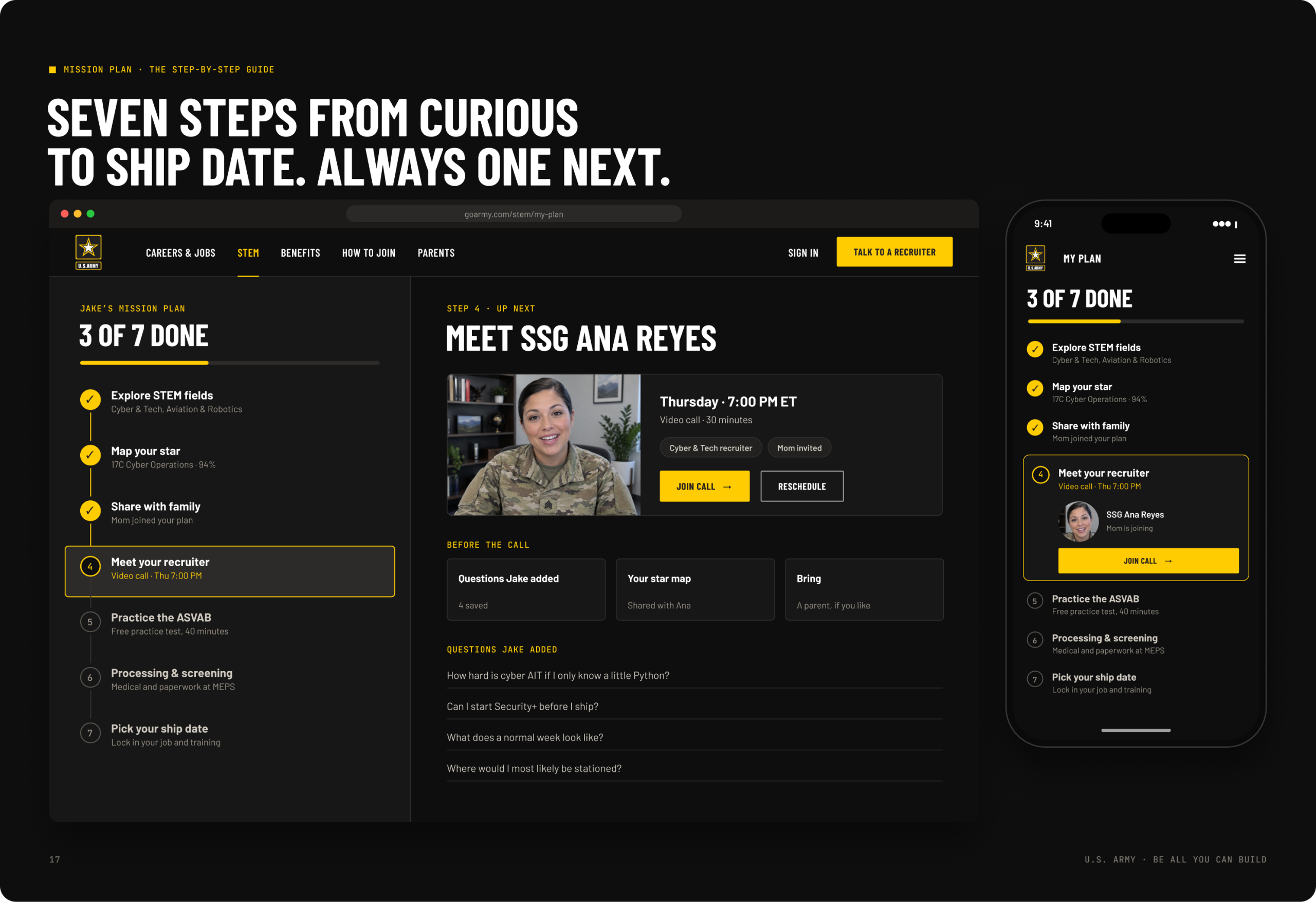
- Mission plan. The step-by-step guide — seven steps from curious to ship date, always with one clear next step, and parents can follow along.
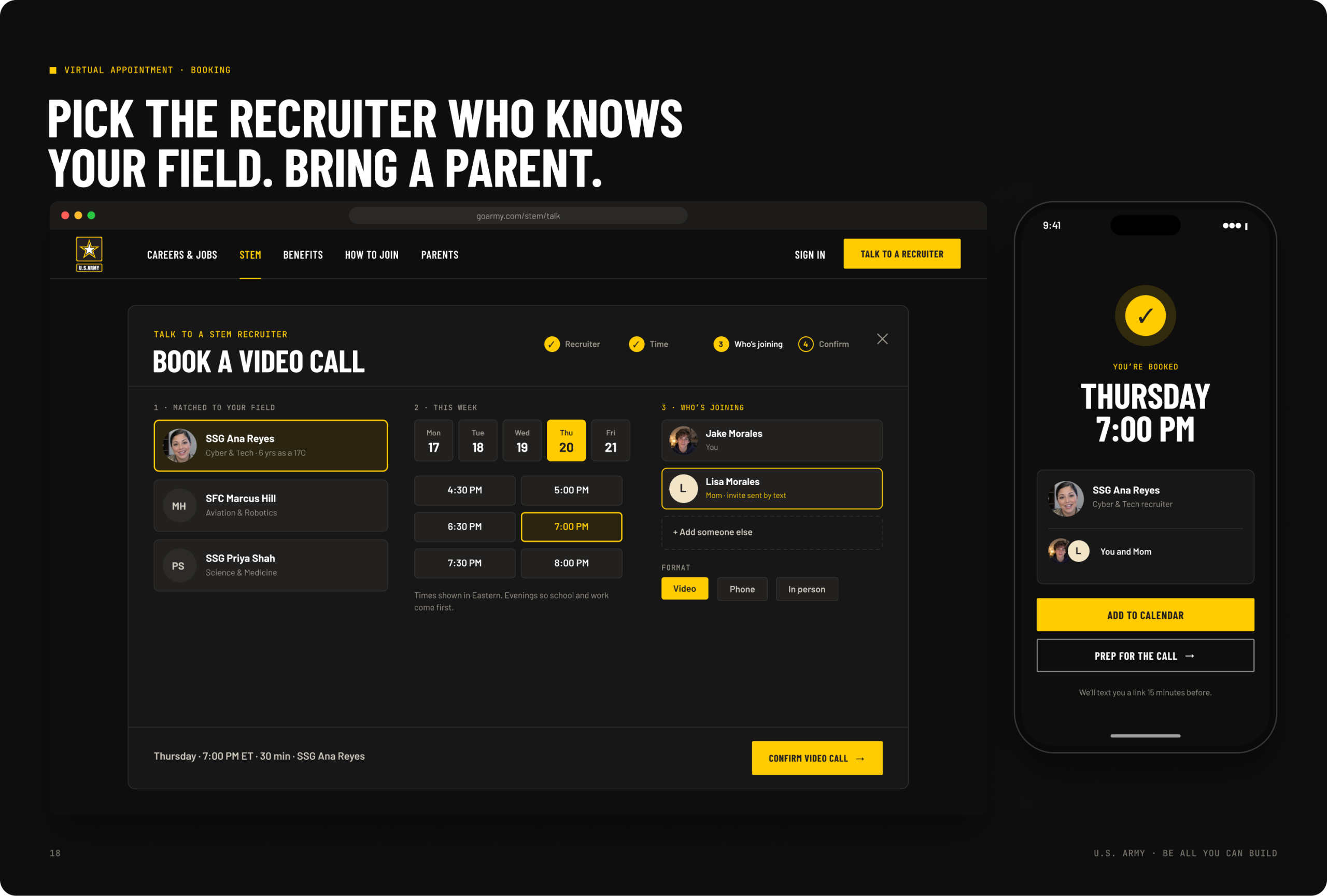
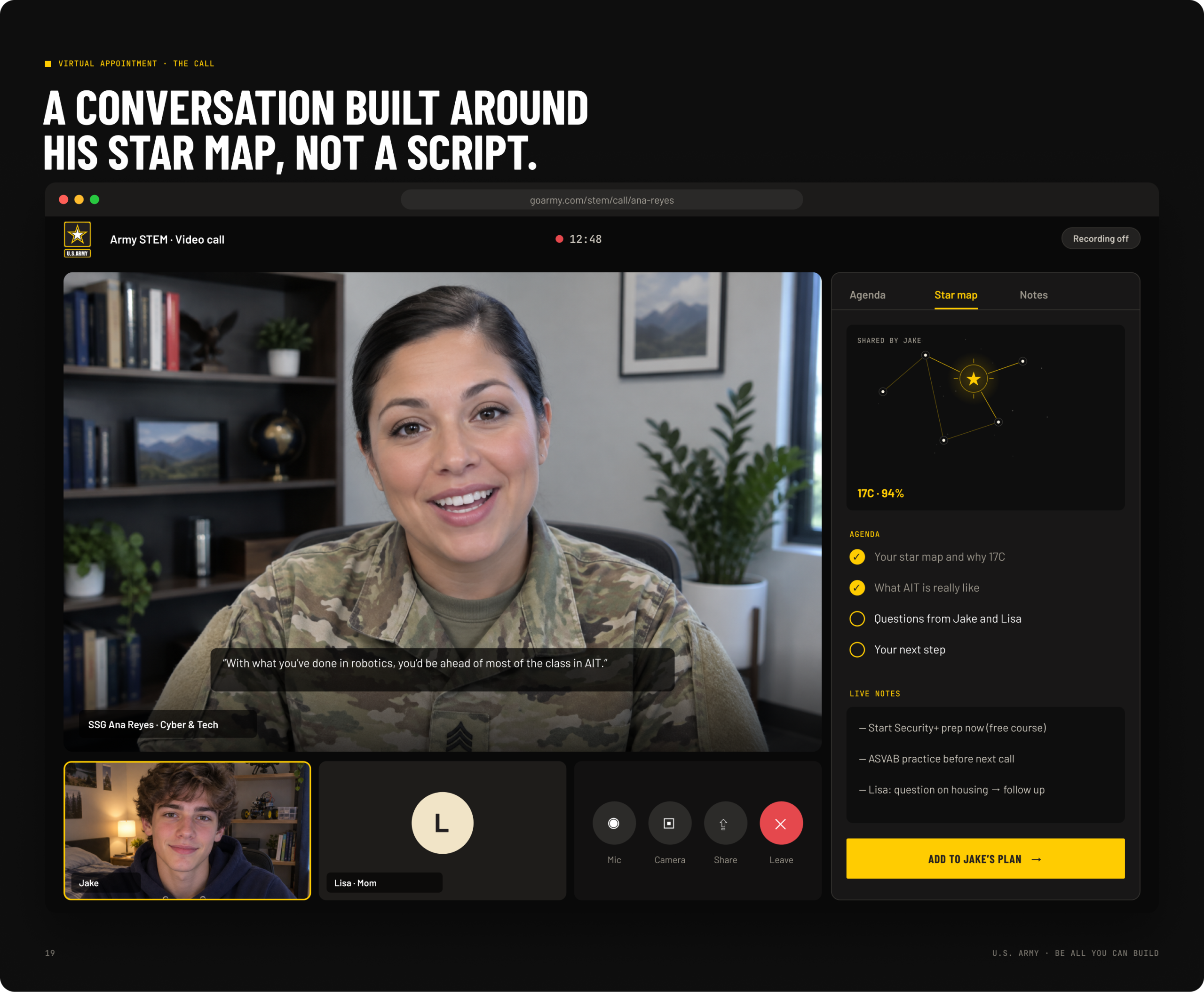
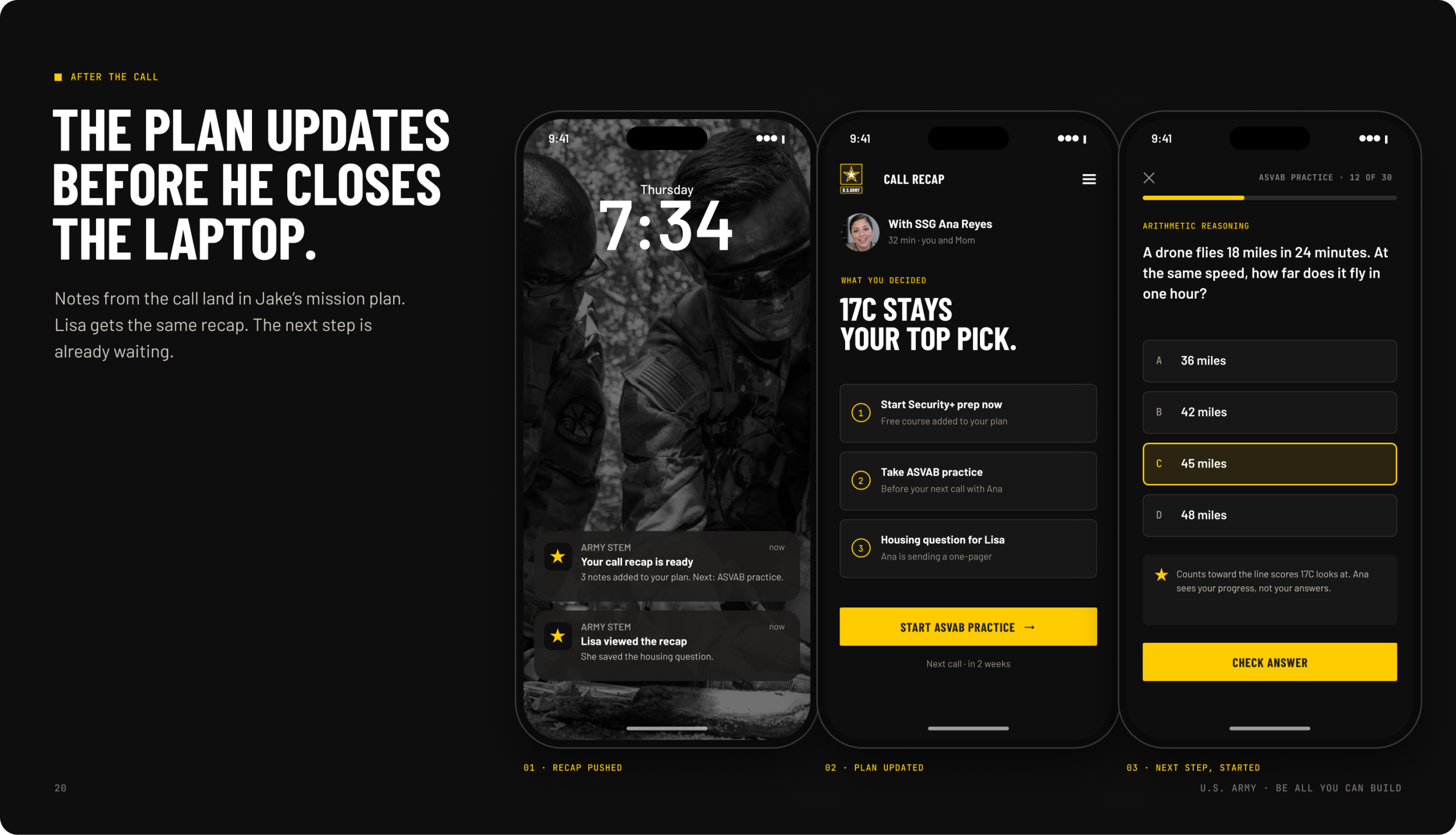
- Virtual appointment and interview. Booking matches people with a recruiter who knows their field, and they can bring a parent. The call is built around the student’s star map instead of a script, notes land in the mission plan before they close the laptop, and the same recap goes to the parent.
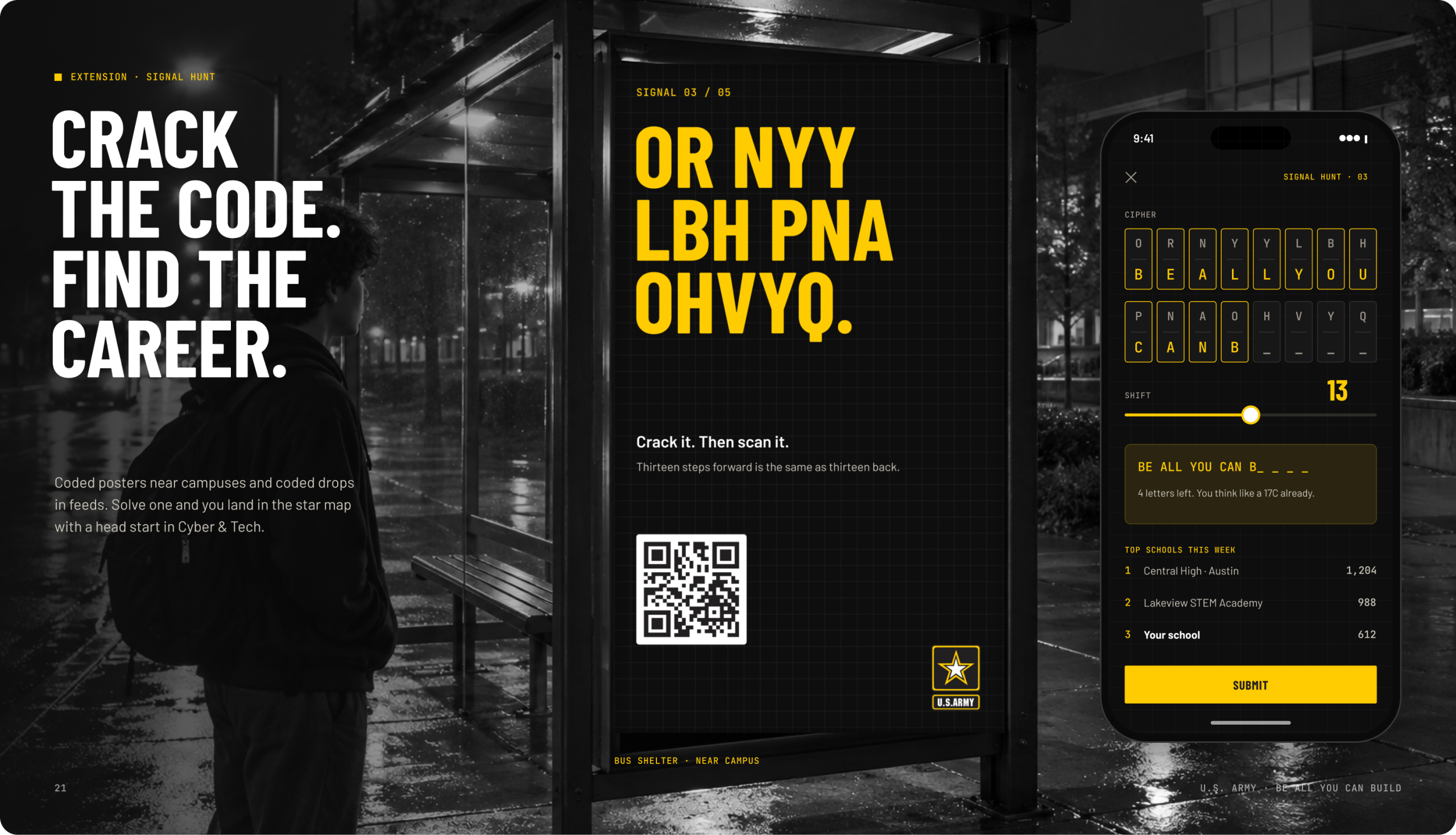
- Signal Hunt. Coded posters near campuses and coded drops in social feeds. Crack the cipher, scan the code, and you land in the star map already pointed toward Cyber & Tech, with a leaderboard that lets schools compete.
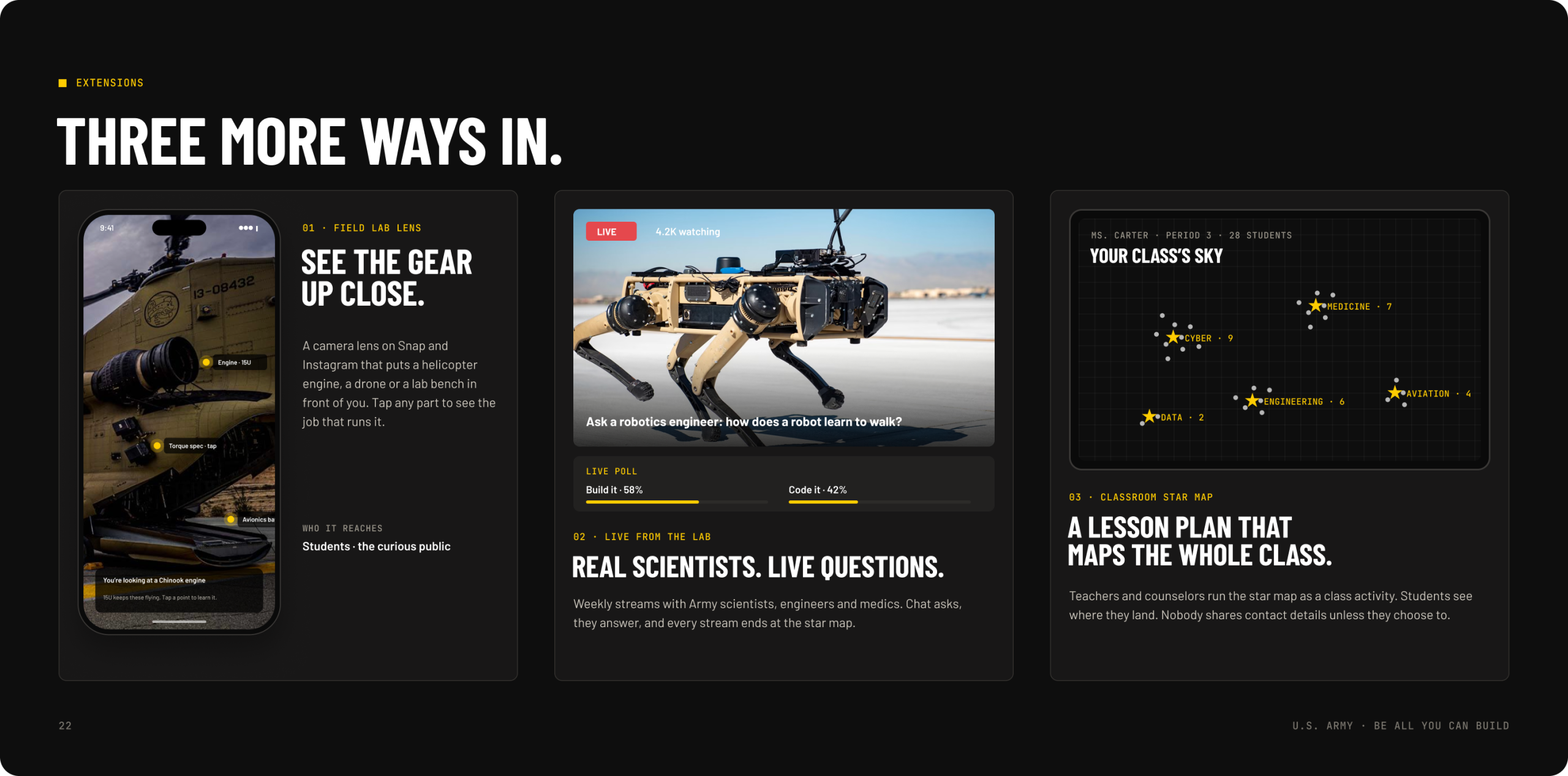
- Field Lab lens. A camera lens on Snap and Instagram that puts a helicopter engine, a drone or a lab bench in front of you. Tap any part to see the job that keeps it running.
- Live from the Lab. Weekly streams with Army scientists, engineers and medics. Chat asks, they answer, and every stream ends at the star map.
- Classroom star map. A lesson plan for teachers and counselors that runs the star map as a class activity, so students can see where they land together. Nobody shares contact details unless they choose to.
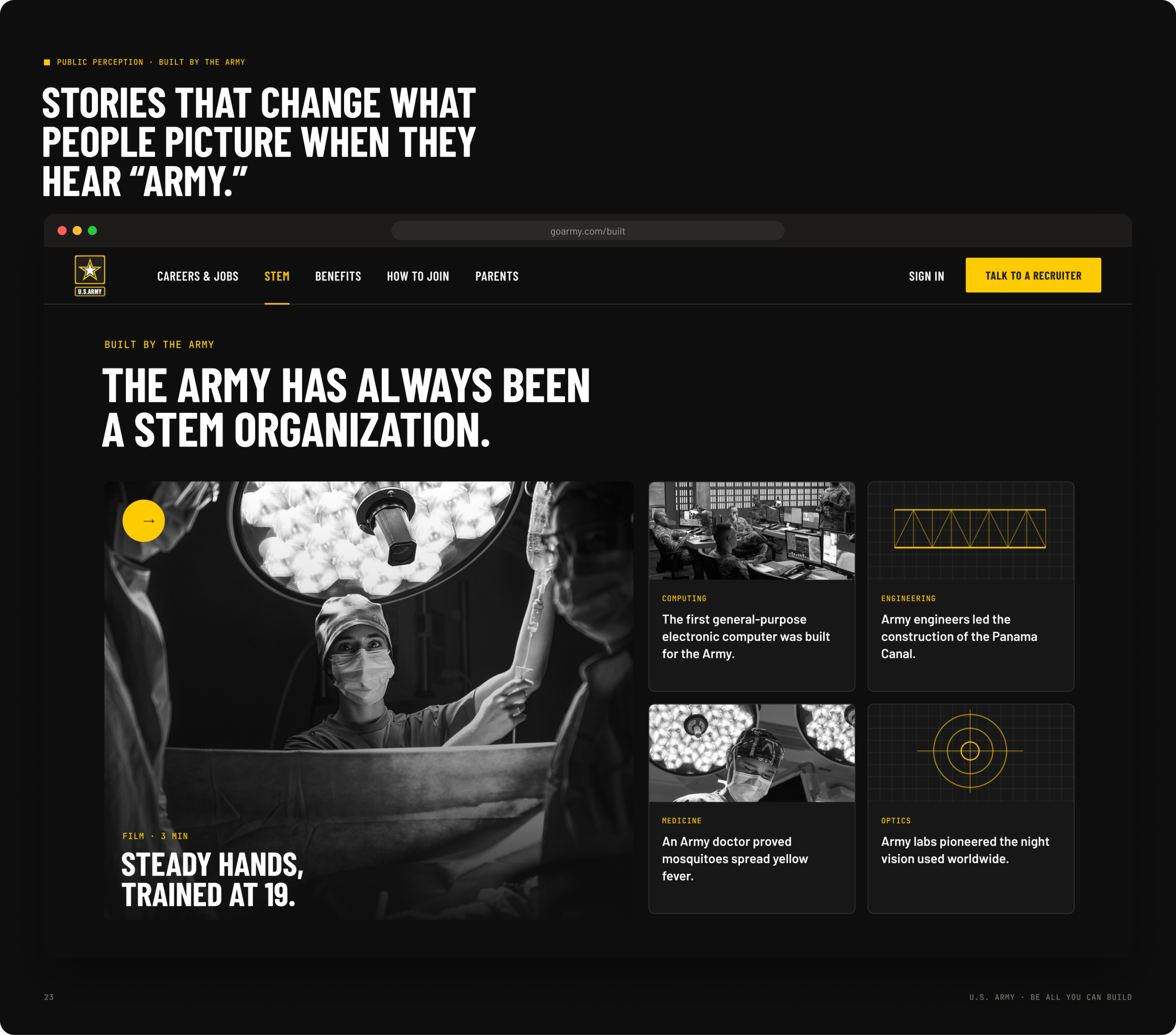
- Built by the Army. A content series for the general public on the Army’s long STEM history, from the first general-purpose electronic computer to the construction of the Panama Canal — aimed at changing what people picture when they hear “Army.”